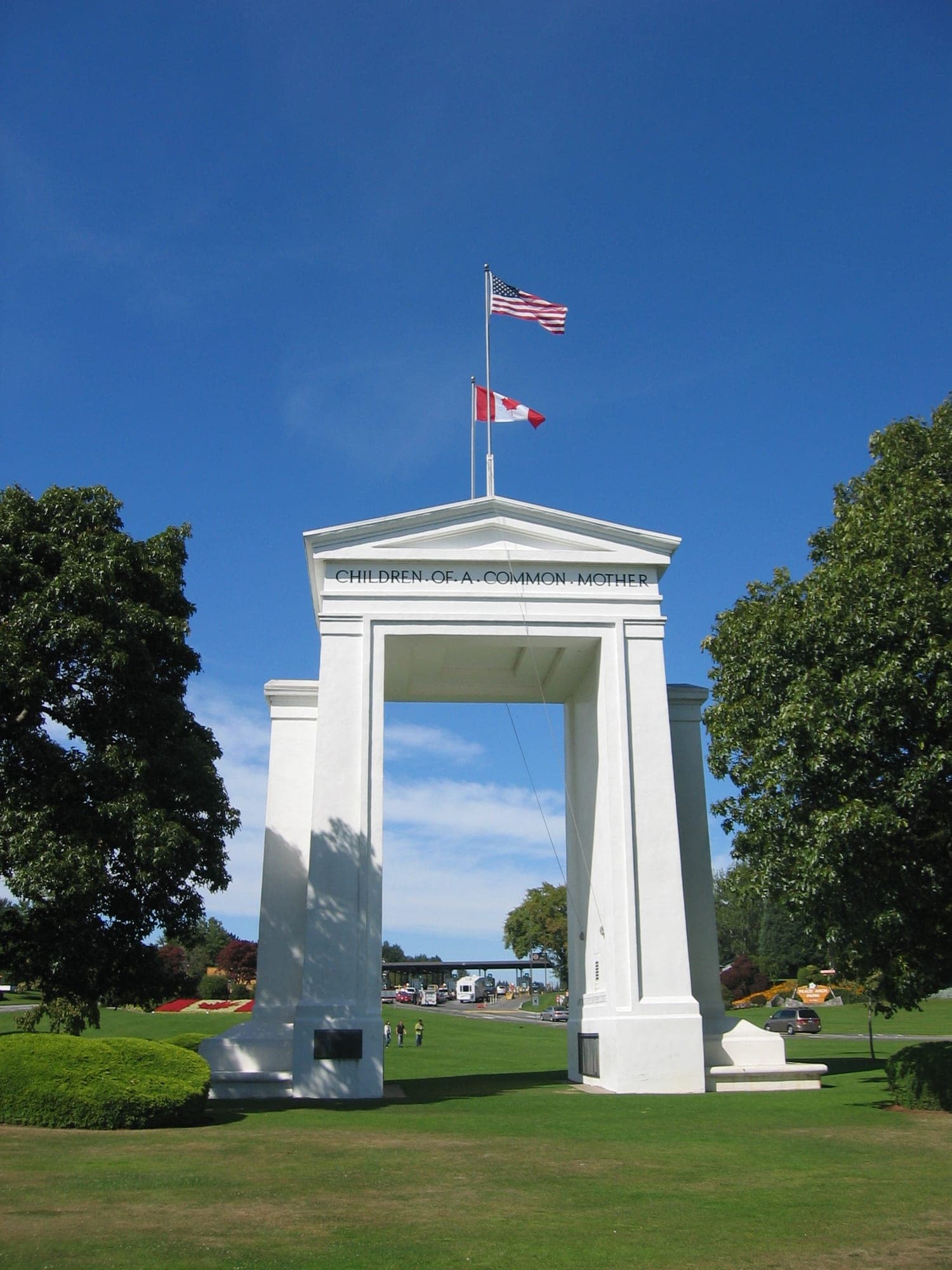
landmarkPeace Arch Provincial Park
A 20-metre marble arch straddling the BC–Washington border, built to celebrate a century of peace.

British Columbia's fastest-growing city — bigger, younger, and more diverse than most of Canada realises.
Living in Surrey
Surrey is the second-largest city in British Columbia — and the fastest-growing city in Metro Vancouver. At 568,000 people and climbing toward 700,000 by the end of the decade, it's on track to overtake the City of Vancouver itself within a generation. If you picture Vancouver, picture Surrey as its younger, more diverse, more affordable, much larger sibling on the other side of the Fraser River. Almost half of Surrey residents were born outside Canada, and the city is home to the largest Punjabi-speaking community in North America outside of Punjab itself.
Newcomers usually arrive with one of two impressions. Either they've heard Surrey is unsafe and sprawling (the old reputation), or they know someone who moved there for the cheaper rent and the community. Both contain some truth and a lot of outdated myth. Surrey today has six distinct town centres — City Centre, Guildford, Fleetwood, Newton, Cloverdale, and South Surrey — each with its own character, its own grocery stores, and its own commute patterns. The transit picture is about to change dramatically when the Surrey–Langley SkyTrain opens toward the end of the decade, extending the Expo Line east and finally unlocking the Fraser Highway corridor.
The Surrey advantage is simple math: a two-bedroom apartment in Surrey costs roughly two-thirds of what the same unit costs in the City of Vancouver, and houses are more than half as expensive. For families on normal salaries, that's the difference between buying and renting forever. The tradeoff is a longer commute if your job is downtown Vancouver — but most newcomers find that the community, the schools, and the value are worth it.
Where to live
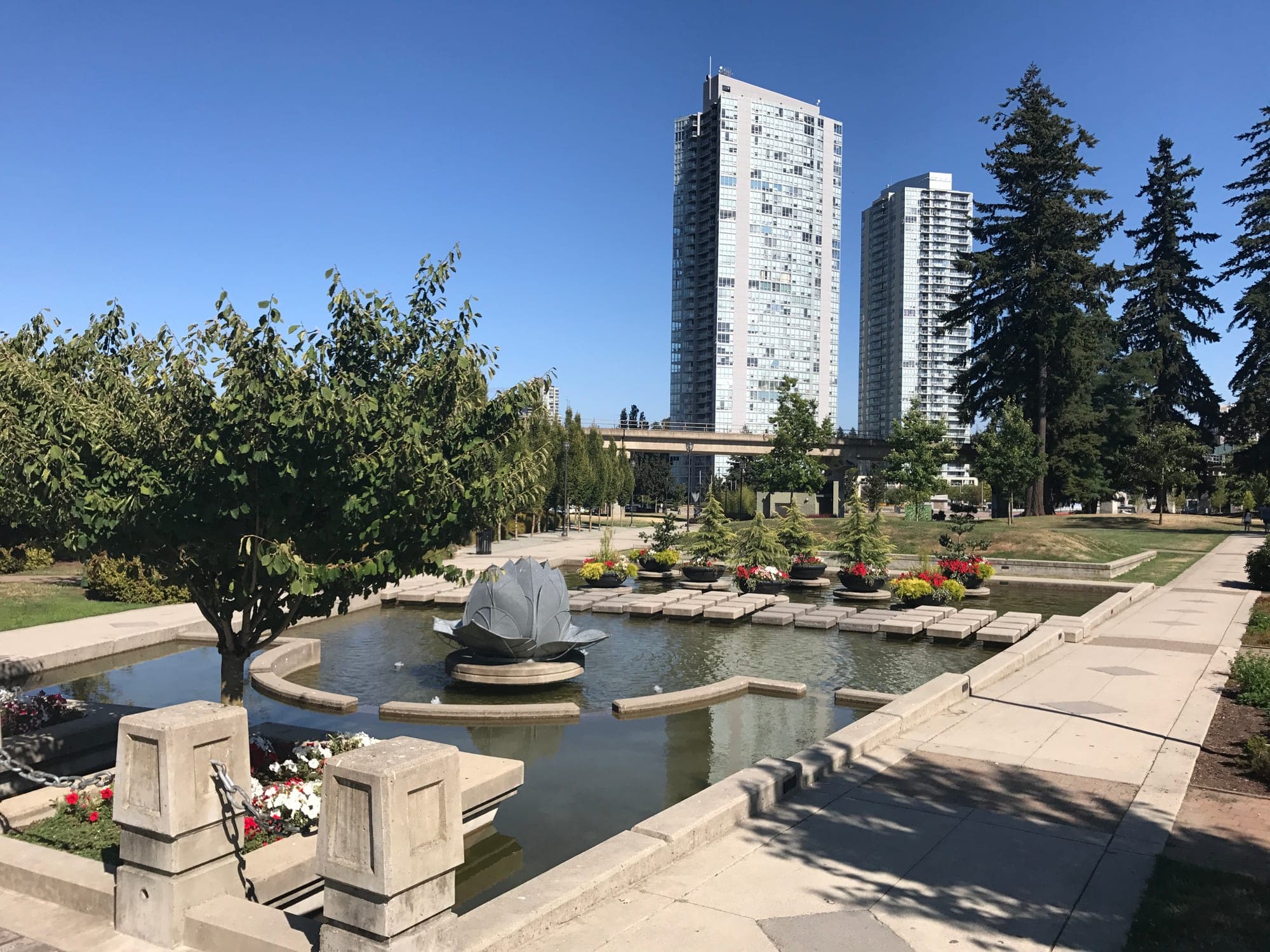
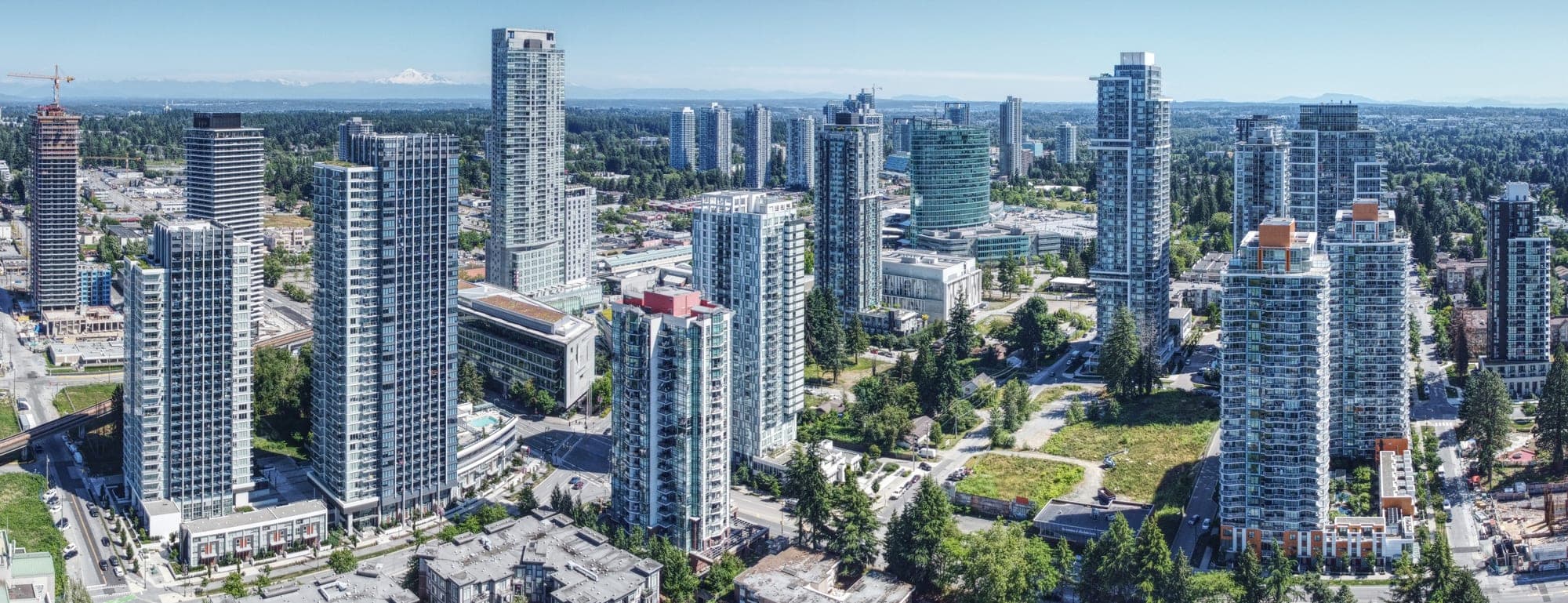
Surrey's rapidly-rising downtown — new high-rises, the Expo Line, and the city's future.
Eastern Surrey's family heartland — Guildford Town Centre, big-box retail, and quiet suburbs.
Middle Surrey between Guildford and Cloverdale — about to change when the SkyTrain arrives.
The heart of Surrey's South Asian community — gurdwaras, sweet shops, and the best thali in Metro Vancouver.
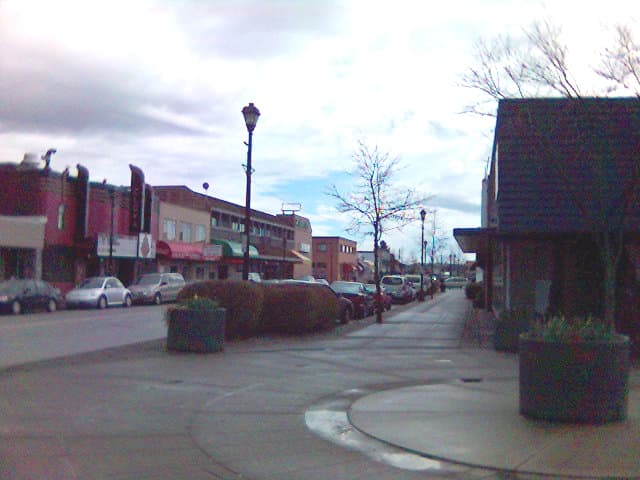
Historic main-street town in southeast Surrey — heritage buildings, a rodeo, and small-town pace.
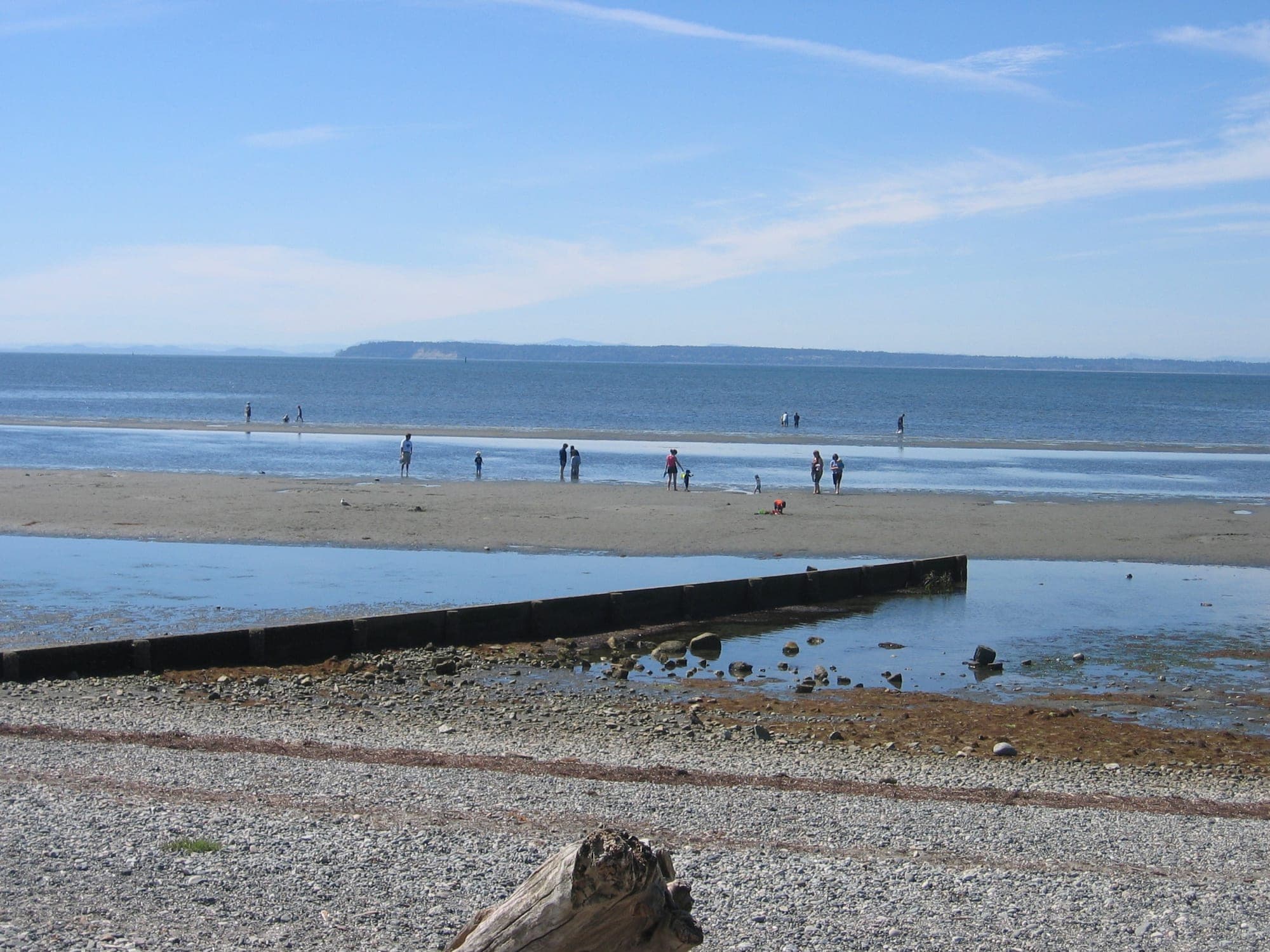
The most affluent corner of Surrey — ocean access, large lots, and the border crossing to Washington.
Rankings
Same neighbourhoods, three different questions. Pick the ranking that matches what matters to you — and we'll tell you which Surrey neighbourhood comes out on top, and why.
Discover
Swipe or use the arrows →
Services in Surrey
Local price ranges for the most-searched home services. Community submissions + researched quotes, updated regularly.
Food in Surrey
Getting around
Surrey is served by the Expo Line (Vancouver's oldest SkyTrain line), which extends from King George station in City Centre west through Gateway, Surrey Central, and Scott Road before crossing the Fraser River into New Westminster. Commutes to downtown Vancouver from Surrey Central take about 40 minutes. The transformative change coming is the Surrey–Langley SkyTrain, an 8-station extension along Fraser Highway that will connect King George east through Fleetwood and on to Langley City. Construction is underway with service expected in 2028–29. Beyond SkyTrain, Surrey is served by frequent B-Line bus routes (96 King George, 503 Fraser Highway) and dozens of local buses that connect the six town centres. Most Surrey residents commuting to downtown Vancouver need a 2-zone monthly pass.
Scott Road · Gateway · Surrey Central · King George
Schools & health
Surrey School District (SD 36) is the largest school district in British Columbia — over 76,000 students enrolled across more than 130 schools. The district is growing so fast that capital expansion is a constant political issue, and some schools run portables while new buildings catch up. Individual school quality varies widely by neighbourhood; South Surrey's Semiahmoo Secondary is consistently ranked among the top public high schools in BC, while parts of Whalley and Newton have schools that struggle with overcrowding. Daycare and preschool waitlists in Surrey are long but generally shorter than in Vancouver proper, and the $10-a-day program is active at many licensed centres. Primary healthcare in Surrey is delivered through Fraser Health, with major hospitals at Surrey Memorial (the second-busiest emergency department in Canada) and Peace Arch Hospital in White Rock.
5 schools with programs, catchments, and BC Ministry of Education performance data.
Public secondary schools
The 5 most-asked-about Surrey School District (SD 36) secondaries, with their programs, the catchment neighbourhoods they serve, and the BC Ministry of Education's own per-school graduation-assessment results where available. Catchment is determined by your home address — verify with the district's catchment lookup before any move.
What the program badges mean
IB, AP, French Immersion, Mini School — what they are, who they suit, and how the application process works.
Standard catchment program (BC Dogwood) · Standard
The default open-enrolment program every BC public secondary runs. Open to anyone in catchment. Leads to the BC Dogwood Diploma — the standard provincial high-school graduation certificate, accepted by every Canadian university and most international ones.
International Baccalaureate (Diploma + Middle Years) · IB
Globally recognised academic programme run alongside or instead of BC Dogwood. The Diploma Programme (DP) is in Grades 11–12 with six subjects + a research essay; the Middle Years Programme (MYP) is in Grades 8–10 and feeds the DP. Application-based, citywide intake, heavier workload than Dogwood. Most useful for students applying to universities outside Canada.
Advanced Placement · AP
Subject-by-subject acceleration toward US-style college credit. Students pick individual AP courses (Calculus AB, English Literature, Chemistry, etc.) and write the AP exam in May. Less common in BC than IB, but useful for students with one or two subject strengths who don't want a full alternative diploma.
French Immersion (early or late entry) · French Immersion
Academic subjects delivered in French through Grade 12. Continuation of the elementary French Immersion program — students entering at the secondary level usually came from a feeder FI elementary. Bilingual graduates get a Dual Dogwood (BC + bilingual). Late immersion (Grade 6 entry) and early immersion (kindergarten entry) merge by secondary.
Mini School cohort programs · Mini School
Application-based four-year academic cohort that runs alongside the regular catchment program inside the same school. Each Mini School has its own theme — Tech (Templeton), Arts (Byng), Challenge (Hamber), academic-enriched (Kitsilano), etc. Open citywide via application; competitive admission with interviews and portfolios depending on theme.
Languages of instruction
Most BC public secondaries deliver subjects in English. French Immersion schools deliver core academic subjects (math, sciences, social studies) in French. A small number of VSB elementaries run Mandarin Bilingual programs feeding into specific secondaries (e.g., Eric Hamber's Mandarin Accelerated stream). Beyond that, languages appear as electives — Mandarin, Punjabi, Spanish, Japanese, and Korean are widely offered in Greater Vancouver depending on the local community.
South Surrey's catchment secondary, consistently among the top-performing public schools in BC, with a strong AP slate and a late-entry French Immersion stream.
Catchment includes: South Surrey
1785 148 Street, Surrey, BC V4A 4M5
Cloverdale's catchment secondary, with a strong arts and athletics tradition, AP courses, and one of Surrey's larger and more established student communities.
Catchment includes: Cloverdale
6151 180 Street, Surrey, BC V3S 4L7
South Surrey catchment secondary with a strong French Immersion stream and a quieter family-school feel than the larger Surrey Centre schools.
Catchment includes: South Surrey
15751 16 Avenue, Surrey, BC V4A 1S2
Fleetwood's catchment secondary, in one of Surrey's most culturally diverse and rapidly densifying neighbourhoods — the upcoming SkyTrain extension will reshape transit access by 2028.
Catchment includes: Fleetwood
7940 156 Street, Surrey, BC V3S 3R3
Newton/Panorama Ridge catchment secondary, serving one of Surrey's most ethnically diverse areas with strong ELL support and a welcoming newcomer culture.
Catchment includes: Newton
6248 144 Street, Surrey, BC V3X 1A4
Official district website
Surrey School District (SD 36) ↗
Catchment lookup, registration, programs, and the authoritative source for any policy change.
Performance data source
BC Ministry of Education — Graduation Assessments ↗
We surface the latest non-masked-cohort year per metric; data retrieved 2026-04-17.
We deliberately don't lead with a single Fraser Institute ranking number — within a few percentage points those ranks are statistical noise, and they leave out everything that matters about the day-to-day school experience. The official BC MoE per-school proficiency rates above are what the province itself publishes about how each school is doing.
Safety in Surrey
Surrey's safety reputation suffers from suburban media coverage that doesn't match daily life across most of the city. Surrey is genuinely big — six distinct town centres, each with very different crime profiles. South Surrey, Cloverdale, and Fleetwood are quieter than nearly anywhere in the City of Vancouver. Newton and parts of Whalley have a higher property-crime profile that's been the subject of years of local-news coverage; the situation around Surrey Central SkyTrain has substantially improved over the past five years as the area has filled in with residential towers and the new Surrey Police Service has stood up.

Surrey CMA
81.2
Crime Severity Index — 2024
Canada (all CMAs)
77.9
Crime Severity Index — 2024
How to read this
Surrey is 3.3 points above the Canadian average. CSI weights crimes by sentencing severity, not just count.
Canada national average: 77.9
Quietest by every common-sense measure
Areas the news cycle asks about
The blocks around King George SkyTrain station have had visible street-disorder issues but are in active redevelopment; new residential towers, Simon Fraser University's Surrey campus, and the Surrey Police Service presence have changed the calculus over the past three years.
Higher property-crime profile (car break-ins, parcel theft) than other Surrey neighbourhoods; daily reality for residents is suburban-quiet, not headline-driven.
Targeting newcomers
These follow a small number of repeating playbooks aimed at people who are new to the city, the country, or the rental market. None of them are unique to Surrey, but the local versions are worth recognising in advance.
Same playbook as the rest of Metro Vancouver — wire transfer demanded for a never-shown unit. Surrey scammers favour newer-looking towers in City Centre and Guildford. Inspect in person before paying anything.
Surrey's SkyTrain park-and-rides at Surrey Central, Gateway, and Scott Road are frequent smash-and-grab targets. Never leave anything visible — chargers, sunglasses, reusable bags all attract attention.
Particularly common in South Surrey and Fleetwood, especially toward older homeowners. Legitimate Surrey contractors carry city business licences — ask for the licence and verify before agreeing to any work.
Robocalls in English, Punjabi, and Mandarin claiming you owe tax or your immigration status has been revoked. CRA and IRCC never call to threaten arrest and never accept gift cards. Hang up.
Targets newcomer workers in the lower Fraser Valley. Legitimate Canadian employment agencies do not charge job-seekers up-front fees. Report to Employment and Social Development Canada.
What to actually do
Safety is about probabilities, not guarantees, and reasonable newcomer caution applies anywhere. If something feels off, trust that instinct. For non-emergency police reports in Surrey, use the local non-emergency police line; for emergencies always call 911.
Weather & seasons
Surrey's climate is slightly milder and drier than Vancouver's — the rain shadow effect from the North Shore mountains means South Surrey in particular gets noticeably less rainfall than downtown Vancouver. Summers are warm and dry; winters are grey and damp but rarely below freezing. Snow is unusual and typically melts within a day.
Late May through early October is the best stretch — warm, dry, long days. The Cloverdale Rodeo (May Long Weekend) and Surrey Fusion Festival (late July) are the signature summer events. November through February is grey and wet, though milder than most of Canada. Winter rarely drops below freezing and snow is uncommon.
Vancouver International Airport (YVR) is about 30 minutes from Surrey City Centre by car via Highway 99. By transit, take the Canada Line SkyTrain from YVR to Bridgeport Station, transfer to the 410 bus to 22nd Street Station in New Westminster, then transfer to the Expo Line to Surrey Central — about 75 minutes total. A taxi or ride-share from YVR to Surrey City Centre runs around $50–70.
The Peace Arch border crossing is 25 minutes south of Surrey City Centre on Highway 99. The Pacific Highway truck crossing on 176 Street is an alternative for longer waits. Driving from Seattle to Surrey City Centre takes 2.5–3 hours depending on border wait times. Amtrak Cascades trains from Seattle stop at Pacific Central Station in Vancouver, which is one SkyTrain transfer (about 40 minutes) from Surrey Central.
Common questions
Yes — substantially. A two-bedroom purpose-built rental in Surrey averages $1,748 per CMHC's 2023 data, compared to $2,181 in the City of Vancouver. On the secondary market (condos and basement suites listed for new tenants), the gap is roughly $1,000–1,200 per month for a two-bedroom. Detached houses in Surrey are less than half the price of equivalent houses in Vancouver proper.
Mostly yes, with neighbourhood variation. Overall crime rates in Surrey are higher than in the City of Vancouver per capita, but the variation between neighbourhoods is large. South Surrey, Cloverdale, Fleetwood, and Guildford are statistically very safe. City Centre / Whalley and parts of Newton have higher rates of property crime and visible street issues, though violent crime is still uncommon. Surrey's police service transition from RCMP to a municipal Surrey Police Service is ongoing and has been politically contested.
By SkyTrain from Surrey Central to Waterfront, it's about 40 minutes at any time of day. From the eastern parts of Surrey (like Fleetwood or Cloverdale), add 15–30 minutes of bus time to reach the SkyTrain. Driving during rush hour is unpredictable — typically 45–75 minutes downtown, depending on Highway 99 and the Alex Fraser / Port Mann bridge traffic.
It depends on what you value. For transit and walkability, Surrey City Centre is the only real choice. For South Asian community and food, Newton is unmatched in all of Canada. For families who want good schools and affordability, Guildford or Fleetwood. For space and ocean access, South Surrey. For character and small-town pace, Cloverdale.
TransLink and the Province of BC broke ground on the Surrey–Langley SkyTrain extension in 2024. The current target is 2028 for initial service, though large transit projects in BC typically slip. The extension will add 8 stations along Fraser Highway, significantly upgrading transit in Fleetwood, Clayton, and Langley.
Probably yes, within about 15–20 years. Surrey added over 100,000 residents between 2011 and 2021 — Vancouver proper added fewer than 40,000 in the same period. Current BC Stats projections put Surrey around 800,000 by 2040; Vancouver, constrained by land and heritage zoning, grows much more slowly.
For most Surrey residents, yes. The exception is if you live within a short walk of an Expo Line station (Surrey Central, Gateway, King George) or in the Fleetwood/Langley corridor once the Surrey–Langley SkyTrain opens. Outside those areas, Surrey is genuinely car-dependent — distances between town centres are significant and frequent bus service is limited to the main arterials.
Surrey Memorial is the main hospital serving Surrey and surrounding areas. Its emergency department is the second-busiest in Canada by patient volume and is chronically overloaded — wait times for non-urgent issues can exceed 6 hours. For serious emergencies the care is generally excellent, but newcomers registering with a family doctor is the single most important step to avoid relying on Surrey Memorial's ER for routine issues.
Surrey has a strong presence in BC's $10-a-day daycare program, with many licensed centres across all six town centres offering subsidised spots. As everywhere in BC, the challenge is the waitlist — put your child on multiple waitlists as early as possible, and apply to the Affordable Child Care Benefit (a separate income-tested subsidy) regardless of whether you get a $10-a-day spot.
Beyond English, Punjabi is by far the most common language in Surrey — it's the mother tongue of roughly 20% of residents, making Surrey the largest Punjabi-speaking community outside of Punjab itself. Hindi, Tagalog, Mandarin, Korean, and Spanish are also widely spoken. Government services in Surrey are typically available in multiple languages, and most schools have strong ELL (English Language Learner) programs.
Plan further
If you're planning a visit, there are hour-by-hour itineraries with cited costs. If you're planning a move, the cost-of-living breakdown and the newcomer essentials guides are the next stops.
Monthly budget
Line-by-line monthly budget with cited rent, groceries, transit, and hydro numbers.
Day trips
Honest day-trip plans with BC Ferries and Sea-to-Sky Highway directions.
Newcomer guides
Step-by-step essentials for the first month in BC — cited and dated.
Keep exploring
Greater Vancouver is a collection of very different cities, each with its own rhythm, rents, and food scene. If you're comparing or planning a move, these are the obvious ones to look at next.
Downtown cores, historic neighbourhoods, and the densest food scene in BC.
Quiet suburbs, Metrotown shopping, and SFU on the mountain.
Home to the best Chinese food in North America and Steveston village.