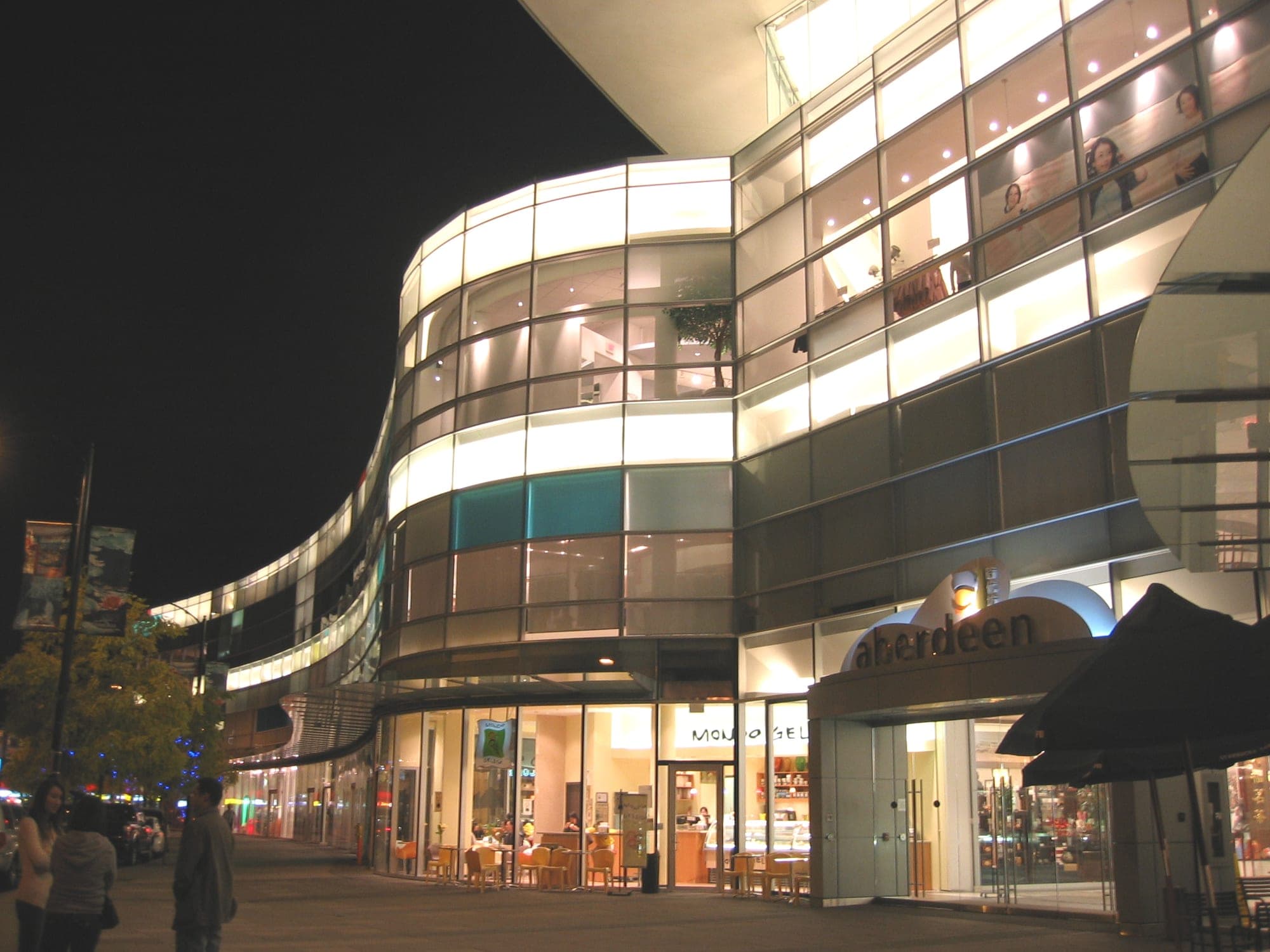
neighbourhoodSteveston Village
A historic salmon-cannery village on the Fraser River — working harbour, heritage buildings, fresh spot prawns, and the best fish and chips in Metro Vancouver.

Canada's most immigrant-majority city and home to the best Chinese food in North America.
Living in Richmond
Richmond is the most foreign-born city in Canada. About six in ten residents were born outside the country — the highest ratio of any municipality of over 100,000 people in the nation. More specifically, it's the largest Chinese-Canadian community in Metro Vancouver, with Cantonese and Mandarin spoken on almost every block in the central business district. For any newcomer from China, Hong Kong, or Taiwan, Richmond is the city where English is optional for daily life and where the food is genuinely as good as the best of Asia.
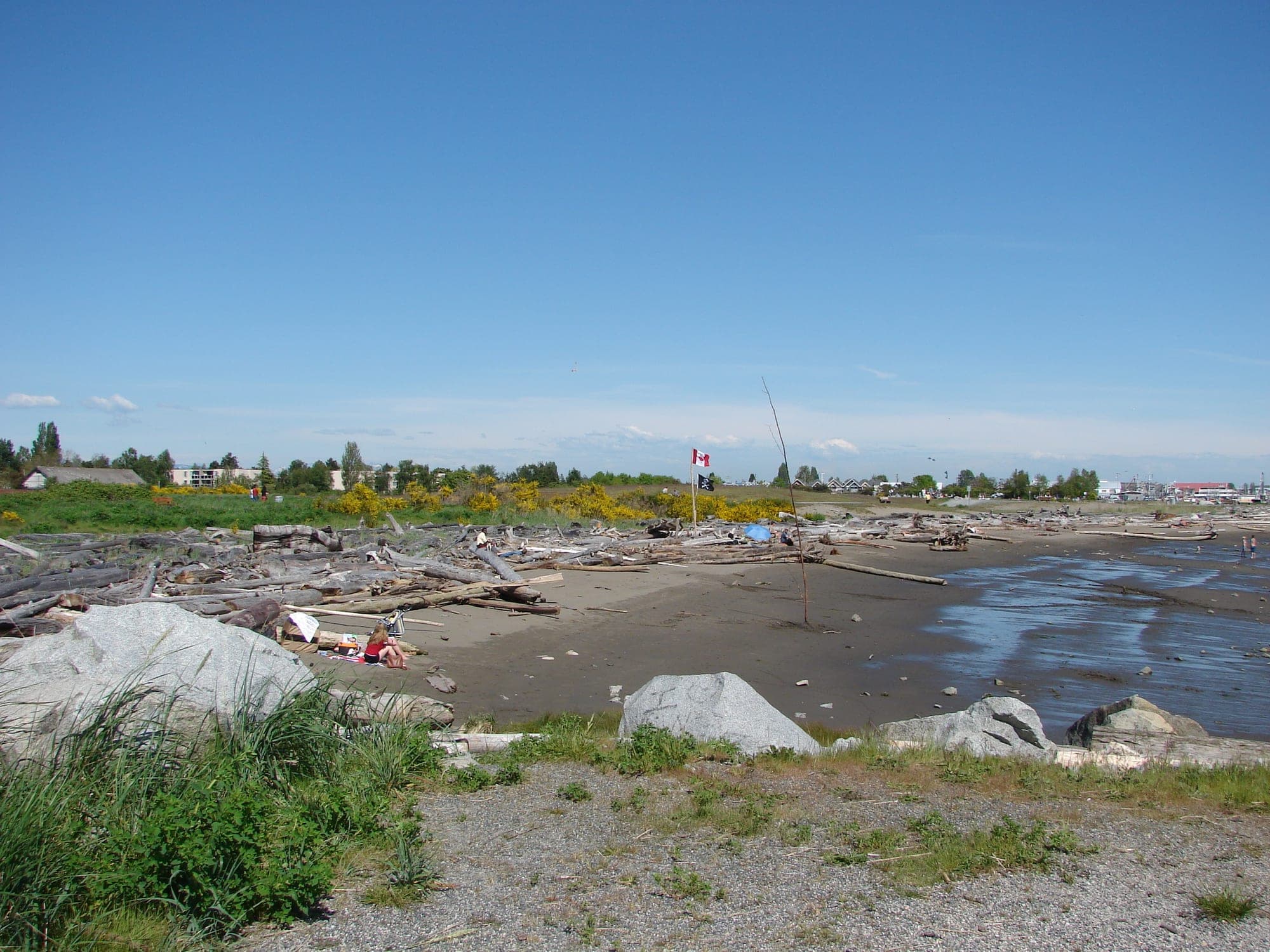
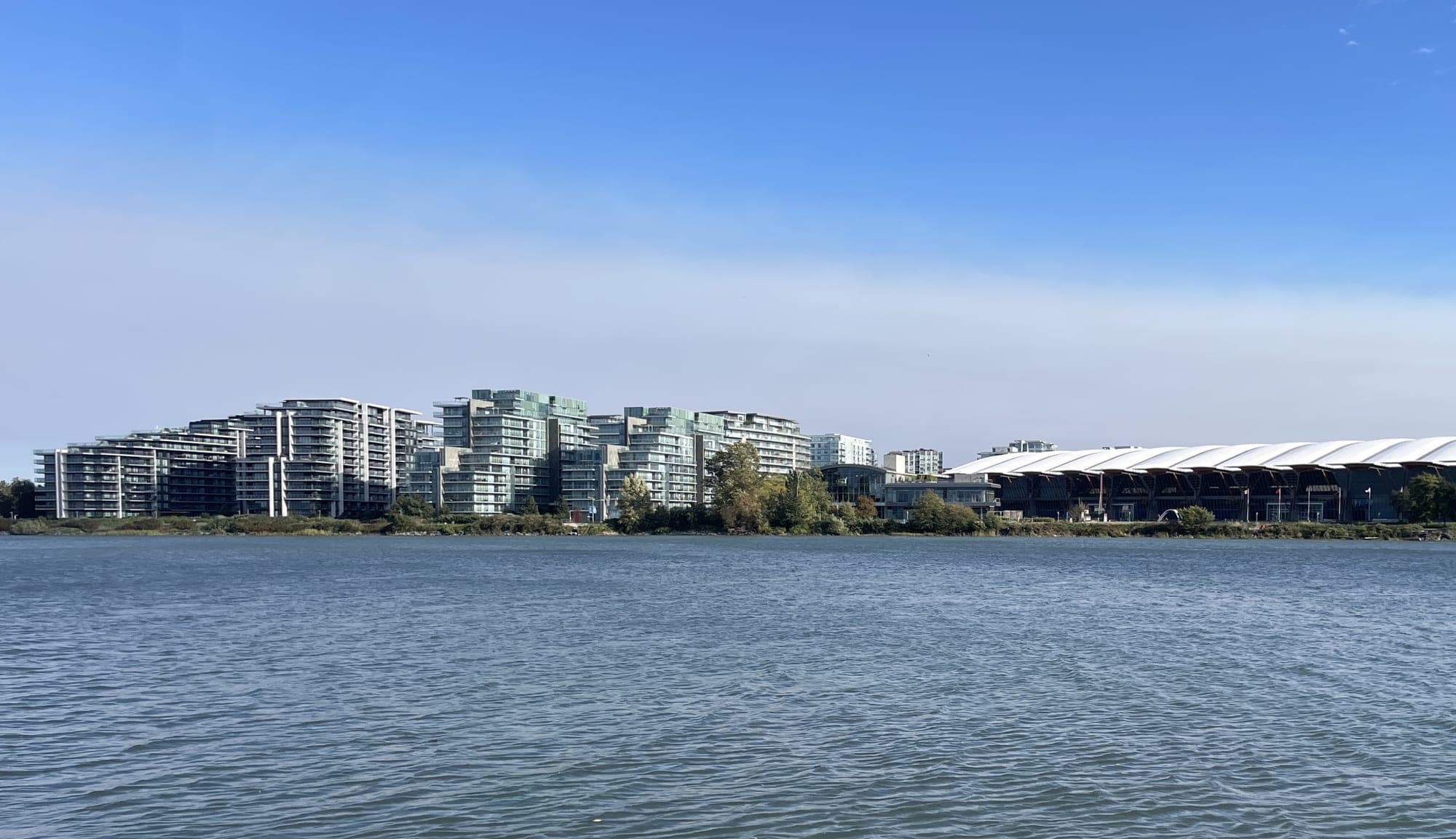
The geography is unique. Richmond sits on Lulu Island — a completely flat river delta at the mouth of the Fraser — which means the city has no hills, a 40 km network of waterfront dyke trails used for running and cycling, and an extremely organized grid of streets. YVR, Vancouver International Airport, is technically in Richmond (on Sea Island, the smaller island to the north). The Canada Line SkyTrain runs the length of the city from YVR through to Richmond-Brighouse in the downtown core, which means Richmond is 20 minutes from downtown Vancouver and literally attached to the airport.
For most newcomers, Richmond offers a trade-off worth understanding. The food is unmatched — Alexandra Road alone has more authentic Chinese restaurants per kilometre than anywhere outside of Asia. The transit is excellent. Rents are meaningfully cheaper than the City of Vancouver. The schools are strong (Richmond School District consistently ranks near the top of BC's public school rankings). The community for Chinese-speaking residents is deep and established. The trade-off is that parts of Richmond are noticeably monocultural — if you don't speak Chinese, you may find some pockets less welcoming than you expected — and the suburban character of the outer neighbourhoods won't appeal to everyone.
Where to live
Richmond's high-density downtown — three shopping malls, the Canada Line, and the densest Chinese-speaking community in North America.
A historic fishing village turned family-friendly waterfront neighbourhood at Richmond's southwest tip.
The southern end of Richmond City Centre — the Canada Line's terminus and Richmond's original downtown.
The suburban core of Lulu Island — quiet streets, large-lot houses, and some of the best schools in Richmond.
Rankings
Same neighbourhoods, three different questions. Pick the ranking that matches what matters to you — and we'll tell you which Richmond neighbourhood comes out on top, and why.
Discover
Swipe or use the arrows →
Services in Richmond
Local price ranges for the most-searched home services. Community submissions + researched quotes, updated regularly.
Food in Richmond
Getting around
Richmond is served by the Canada Line, which runs from Waterfront station in downtown Vancouver south across the Fraser River, then splits at Bridgeport: one branch continues south through downtown Richmond (Aberdeen, Lansdowne, Richmond-Brighouse) and the other goes west to YVR Airport (Templeton, Sea Island Centre, YVR). Travel time from downtown Vancouver to Richmond-Brighouse is about 22 minutes; to YVR it's about 26 minutes. Beyond the SkyTrain, Richmond has frequent bus service along the main east-west routes (Granville, No. 3 Road, Westminster Highway). Because Richmond is completely flat, it has the best cycling infrastructure of any city in Metro Vancouver — a 40 km network of dedicated dyke trails circles the entire island.
Bridgeport · Aberdeen · Lansdowne · Richmond–Brighouse · YVR–Airport
Schools & health
The Richmond School District (SD 38) consistently ranks among the top public school districts in British Columbia, with academic results that are regularly above the provincial average and often well above. Many Chinese-speaking families move to Richmond specifically for the school system, and the catchment maps for top-ranked schools like Burnett Secondary and McMath Secondary are studied carefully by relocating families. Daycare in Richmond follows the same pattern as the rest of Metro Vancouver — waitlists are long, the $10-a-day program is active at many centres, but demand far exceeds supply. Primary healthcare is delivered through Vancouver Coastal Health, with Richmond Hospital as the main acute care facility.
5 schools with programs, catchments, and BC Ministry of Education performance data.
Public secondary schools
The 5 most-asked-about Richmond School District (SD 38) secondaries, with their programs, the catchment neighbourhoods they serve, and the BC Ministry of Education's own per-school graduation-assessment results where available. Catchment is determined by your home address — verify with the district's catchment lookup before any move.
What the program badges mean
IB, AP, French Immersion, Mini School — what they are, who they suit, and how the application process works.
Standard catchment program (BC Dogwood) · Standard
The default open-enrolment program every BC public secondary runs. Open to anyone in catchment. Leads to the BC Dogwood Diploma — the standard provincial high-school graduation certificate, accepted by every Canadian university and most international ones.
International Baccalaureate (Diploma + Middle Years) · IB
Globally recognised academic programme run alongside or instead of BC Dogwood. The Diploma Programme (DP) is in Grades 11–12 with six subjects + a research essay; the Middle Years Programme (MYP) is in Grades 8–10 and feeds the DP. Application-based, citywide intake, heavier workload than Dogwood. Most useful for students applying to universities outside Canada.
Advanced Placement · AP
Subject-by-subject acceleration toward US-style college credit. Students pick individual AP courses (Calculus AB, English Literature, Chemistry, etc.) and write the AP exam in May. Less common in BC than IB, but useful for students with one or two subject strengths who don't want a full alternative diploma.
French Immersion (early or late entry) · French Immersion
Academic subjects delivered in French through Grade 12. Continuation of the elementary French Immersion program — students entering at the secondary level usually came from a feeder FI elementary. Bilingual graduates get a Dual Dogwood (BC + bilingual). Late immersion (Grade 6 entry) and early immersion (kindergarten entry) merge by secondary.
Mini School cohort programs · Mini School
Application-based four-year academic cohort that runs alongside the regular catchment program inside the same school. Each Mini School has its own theme — Tech (Templeton), Arts (Byng), Challenge (Hamber), academic-enriched (Kitsilano), etc. Open citywide via application; competitive admission with interviews and portfolios depending on theme.
Languages of instruction
Most BC public secondaries deliver subjects in English. French Immersion schools deliver core academic subjects (math, sciences, social studies) in French. A small number of VSB elementaries run Mandarin Bilingual programs feeding into specific secondaries (e.g., Eric Hamber's Mandarin Accelerated stream). Beyond that, languages appear as electives — Mandarin, Punjabi, Spanish, Japanese, and Korean are widely offered in Greater Vancouver depending on the local community.
Steveston's catchment secondary, consistently among the highest-performing Richmond schools, with strong AP courses and a quieter west-side cohort culture.
Catchment includes: Steveston
4251 Garry Street, Richmond, BC V7E 2V2
Broadmoor's catchment secondary, one of two SD38 schools offering the International Baccalaureate Diploma Programme, with citywide IB intake.
Catchment includes: Broadmoor & Central Richmond
5011 Granville Avenue, Richmond, BC V7C 1E2
South-Richmond catchment secondary covering parts of Steveston and the Williams Road corridor, with a French Immersion stream and strong arts programs.
Catchment includes: Steveston
6600 Williams Road, Richmond, BC V7E 1K5
Brighouse/City Centre catchment secondary, the second SD38 IB Diploma school, with the most transit-accessible location in the district.
Catchment includes: City Centre, Brighouse
7171 Minoru Boulevard, Richmond, BC V6Y 1Z3
East Richmond catchment secondary covering the Williams Road and No. 5 Road residential areas, with strong ELL support and a culturally diverse student body.
Catchment includes: Steveston
8980 Williams Road, Richmond, BC V7A 1G6
Official district website
Richmond School District (SD 38) ↗
Catchment lookup, registration, programs, and the authoritative source for any policy change.
Performance data source
BC Ministry of Education — Graduation Assessments ↗
We surface the latest non-masked-cohort year per metric; data retrieved 2026-04-17.
We deliberately don't lead with a single Fraser Institute ranking number — within a few percentage points those ranks are statistical noise, and they leave out everything that matters about the day-to-day school experience. The official BC MoE per-school proficiency rates above are what the province itself publishes about how each school is doing.
Safety in Richmond
Richmond is among the safest cities in Metro Vancouver by every common-sense measure. The combination of low population density outside the city centre, a high proportion of owner-occupied family homes, and a community-oriented culture across the city's large Asian-Canadian population produces a very quiet daily reality. Steveston is genuinely village-like; Broadmoor and Garden City are established quiet suburbs. Some seasonal property crime concentrates around the City Centre / Brighouse retail areas, but violent crime is rare even by Canadian suburban standards.

Richmond CMA
81.2
Crime Severity Index — 2024
Canada (all CMAs)
77.9
Crime Severity Index — 2024
How to read this
Richmond is 3.3 points above the Canadian average. CSI weights crimes by sentencing severity, not just count.
Canada national average: 77.9
Quietest by every common-sense measure
Areas the news cycle asks about
The retail core around No. 3 Road and Aberdeen Centre has the property-crime profile typical of any major mall area — car break-ins and parcel theft — but is otherwise quiet at night.
Targeting newcomers
These follow a small number of repeating playbooks aimed at people who are new to the city, the country, or the rental market. None of them are unique to Richmond, but the local versions are worth recognising in advance.
Robocalls and texts in Mandarin or Cantonese claiming a family member is in trouble or that the CRA needs immediate payment. Richmond RCMP issues regular warnings. Hang up and verify directly with the supposed family member or the CRA's published number.
Spoofed emails impersonating a real-estate lawyer, asking for deposit funds to be wired to a new account at the last minute. Always call your lawyer at a number you've used before to verify any wire-instruction change.
Same playbook as the rest of Metro Van — wire transfer demanded for a never-shown unit. Inspect in person; never send money to a landlord you haven't met.
Aberdeen, Lansdowne, and Richmond Centre lots see regular smash-and-grabs around holiday shopping seasons. Trunk-store shopping bags before you arrive, not in the lot.
Unsolicited 'remote assistant' or 'mystery shopper' offers that pay an advance cheque, ask you to forward most of it via crypto, then the cheque bounces. Legitimate Canadian employers don't pay before any work is done.
What to actually do
Safety is about probabilities, not guarantees, and reasonable newcomer caution applies anywhere. If something feels off, trust that instinct. For non-emergency police reports in Richmond, use the local non-emergency police line; for emergencies always call 911.
Weather & seasons
Richmond's climate is almost identical to Vancouver's — mild, wet winters and warm dry summers. Because it sits on an open river delta with no trees or topography to block the wind, Richmond tends to be slightly windier and a degree or two cooler in summer than inland parts of Vancouver. Snow is rare and melts within a day when it does fall.
Late spring through early autumn (May to early October) is peak Richmond — warm, dry, and the Richmond Night Market is running (Fridays through Sundays, May to October). Summer also brings the best fresh seafood at Steveston's Fisherman's Wharf, especially during the spot prawn season in May/June. Winters are grey and damp but mild, and indoor attractions like the Aberdeen food court and the Buddhist Temple are just as good year-round.
YVR is in Richmond, on Sea Island just north of Lulu Island. From the airport terminals, the Canada Line SkyTrain runs directly to Richmond-Brighouse in downtown Richmond in about 15 minutes, with fares around $4.50 for adults. A taxi from YVR to Richmond City Centre costs about $15–25 and takes 10 minutes.
Richmond is about 40 minutes north of the Peace Arch US border crossing via Highway 99. Amtrak Cascades from Seattle stops at Pacific Central Station in downtown Vancouver, which is a 25-minute Canada Line ride from Richmond.
Common questions
Richmond is the strongest Chinese-speaking community in all of Metro Vancouver, with Cantonese and Mandarin spoken as a mother tongue by roughly half of residents. For newcomers from China, Hong Kong, or Taiwan, it's the easiest landing point in Canada for daily life, retail, banking, and healthcare in Chinese. Both the City of Richmond and the Richmond School District provide many services in Chinese, and most medical clinics in Richmond have Chinese-speaking staff.
Noticeably cheaper but more expensive than Surrey. CMHC's 2023 data puts a Richmond two-bedroom purpose-built rental at $1,902 vs Vancouver's $2,181 and Surrey's $1,748. On the secondary market the gap is typically $500–700 per month in favour of Richmond versus equivalent Vancouver units. Detached houses are cheaper than Vancouver but still expensive — Broadmoor and Terra Nova routinely see houses over $2M.
The Canada Line SkyTrain runs from YVR directly into downtown Richmond (Aberdeen, Lansdowne, Richmond-Brighouse stations) in about 15 minutes. Adult fare is around $4.50. No YVR AddFare applies for travel within the airport-Richmond zone. A taxi from YVR to downtown Richmond is $15–25.
Richmond has one of the lowest crime rates of any major city in Metro Vancouver. Violent crime is uncommon across the board, and property crime (while present) is lower than in Vancouver City Centre or Surrey Whalley. Some residents report feeling less welcome in pockets of the city if they don't speak Chinese, but this is a cultural observation rather than a safety issue.
Widely considered the best Chinese food scene in North America. Alexandra Road (also called 'Food Street') in City Centre has more than 200 Asian restaurants in a 3-block stretch. The Aberdeen Centre mall food court alone has national media coverage for its authentic Chinese regional cuisine. The Richmond Night Market runs summer weekends and has 100+ food stalls. For Chinese food specifically, Richmond is unmatched; for other cuisines, expect good but not exceptional options.
If you live within a 10-minute walk of the Canada Line (City Centre, Brighouse, Aberdeen, Lansdowne, Bridgeport), you can comfortably live without a car — transit, groceries, and food are all walkable or a short SkyTrain ride away. Outside City Centre, Richmond is more car-dependent. The exception is that Richmond is completely flat and has excellent dyke trails, so cycling is a genuinely practical alternative for most trips.
The Richmond School District (SD 38) consistently ranks among the top-performing public school districts in British Columbia. Individual schools like McMath Secondary, Burnett Secondary, and Steveston-London Secondary are regularly in the top decile of BC high schools. Elementary schools across the district perform well above the provincial average.
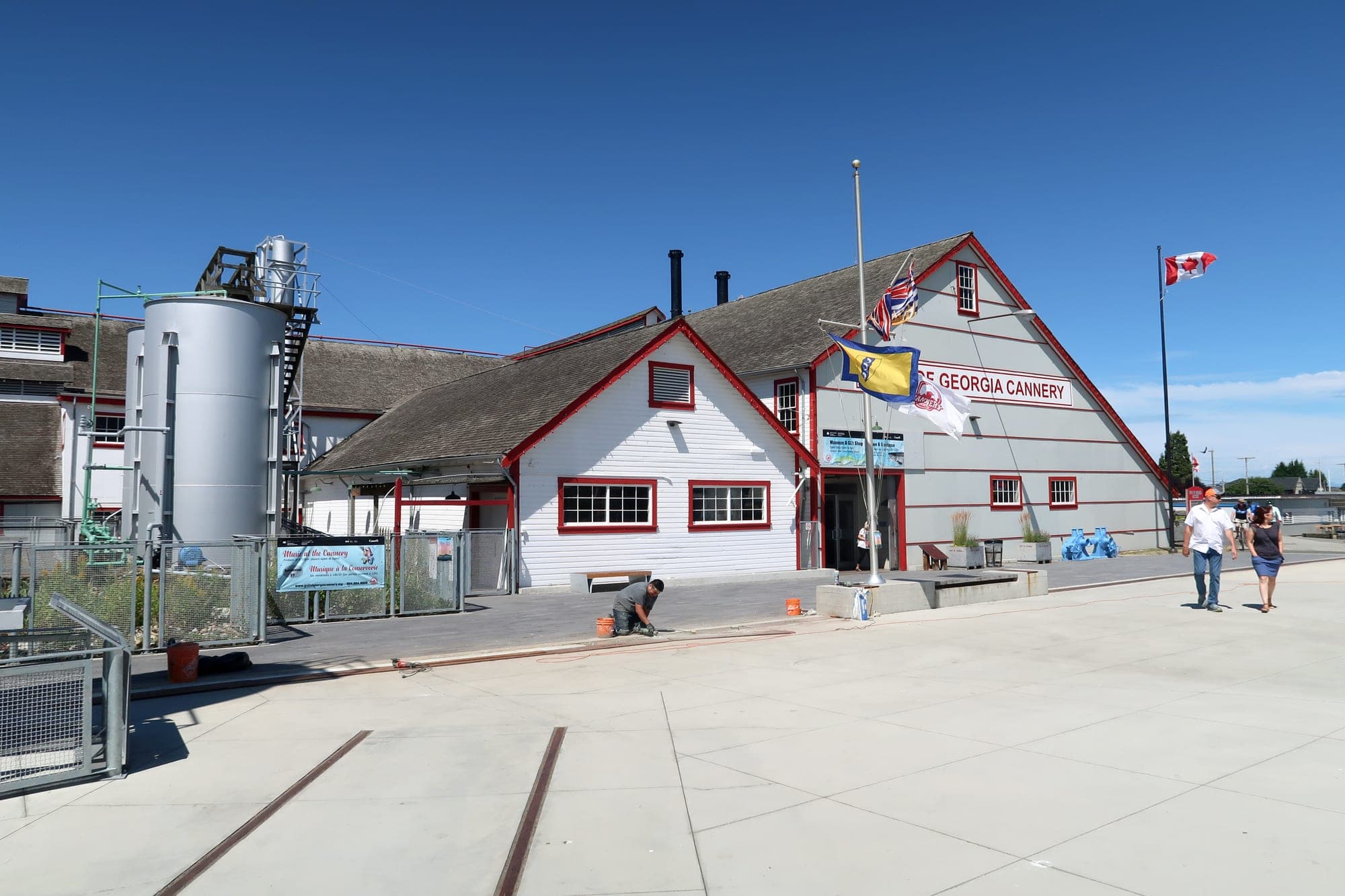
Yes — it's one of the most distinctive neighbourhoods in Metro Vancouver. The historic fishing village, the Gulf of Georgia Cannery, the working fish market at Fisherman's Wharf, and the waterfront dyke walk are all excellent and none of them feel like Canada. It's a half-day visit and it's accessible by bus from Richmond-Brighouse SkyTrain station.
Richmond sits on a river delta and most of the city is less than one metre above sea level, protected by an extensive dyke system. The dykes are maintained to 200-year flood standards and the City of Richmond has an active flood management program. Residents don't typically experience day-to-day flooding, but climate-change-related sea-level rise is a long-term planning issue the city is actively addressing.
From Richmond-Brighouse SkyTrain station to Waterfront station in downtown Vancouver, the Canada Line takes about 22 minutes, running every 4–6 minutes during rush hour. Driving during rush hour is unpredictable but typically 30–50 minutes via the Oak Street Bridge or the Arthur Laing Bridge. Most Richmond-to-Vancouver commuters take the SkyTrain.
Plan further
If you're planning a visit, there are hour-by-hour itineraries with cited costs. If you're planning a move, the cost-of-living breakdown and the newcomer essentials guides are the next stops.
Monthly budget
Line-by-line monthly budget with cited rent, groceries, transit, and hydro numbers.
Day trips
Honest day-trip plans with BC Ferries and Sea-to-Sky Highway directions.
Newcomer guides
Step-by-step essentials for the first month in BC — cited and dated.
Keep exploring
Greater Vancouver is a collection of very different cities, each with its own rhythm, rents, and food scene. If you're comparing or planning a move, these are the obvious ones to look at next.
Downtown cores, historic neighbourhoods, and the densest food scene in BC.
Quiet suburbs, Metrotown shopping, and SFU on the mountain.
Fast-growing, family-friendly, with the strongest South Asian community.