VanCityGuide
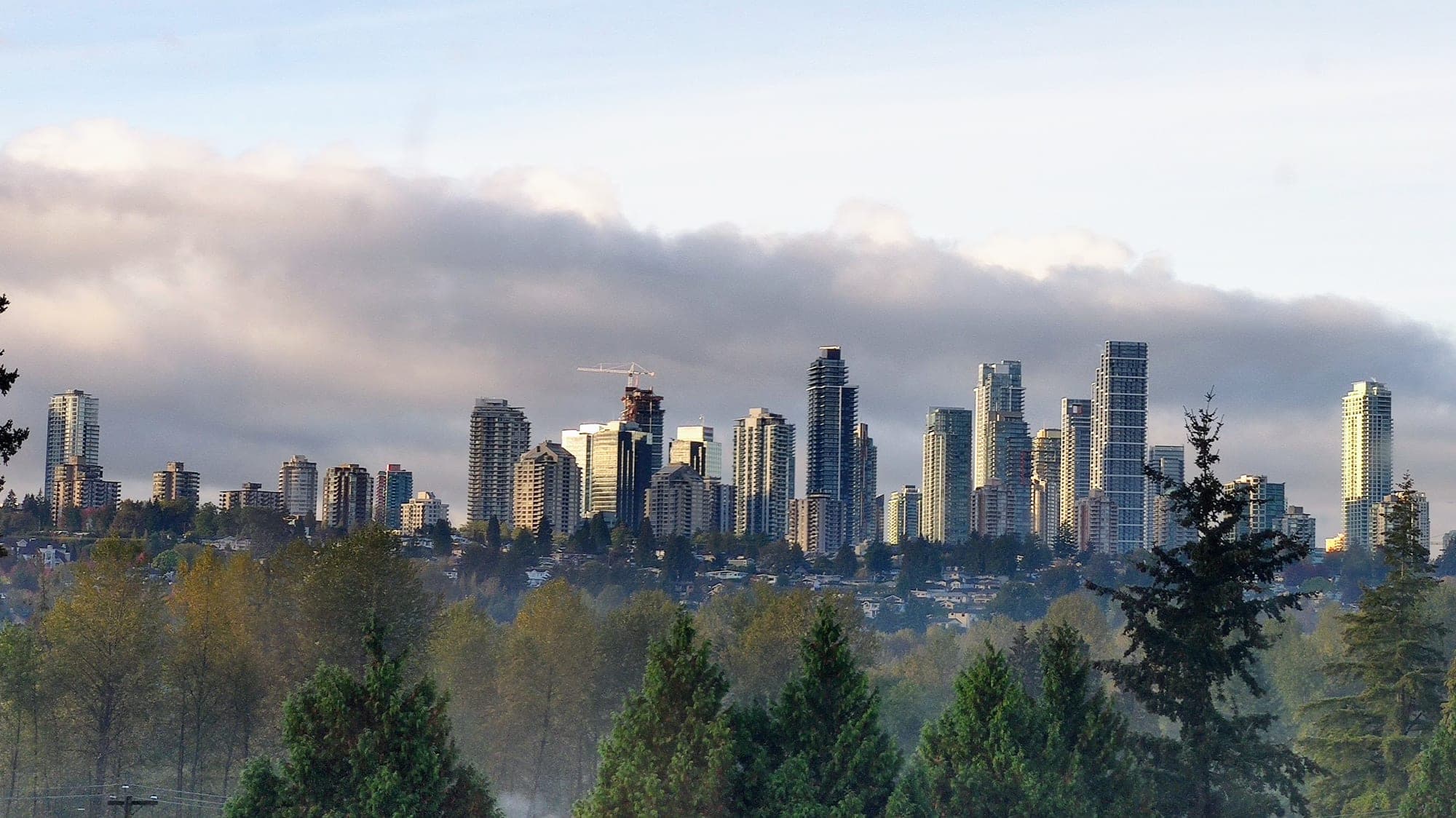
The skyline of Metrotown in Burnaby with dense residential high-rises clustered around the Expo Line SkyTrain corridor.
Greater Vancouver · City Guide

Burnaby

The transit-connected middle city — SFU on the mountain, Metrotown in the middle, and the best-priced SkyTrain access in Metro Vancouver.

Population
249,125
Land area
90.61 km²
2,749 / km²
Median age
41.4
Foreign-born
52.6%
Top languages spoken
MandarinCantoneseKoreanTagalog (Filipino)PersianPunjabi

Living in Burnaby

A city half rainforest, half skyline.

Burnaby is the third-largest city in British Columbia and arguably the most strategically located. Sitting directly east of Vancouver, it's served by both the Expo Line and the Millennium Line SkyTrain — more transit stations than any Metro Vancouver city except Vancouver itself. On one end of the city, Simon Fraser University sits on top of Burnaby Mountain with a 360-degree view of the Lower Mainland. In the middle, Metropolis at Metrotown is the largest shopping centre in Western Canada, surrounded by one of the densest residential districts in the region. On the other end, BCIT (British Columbia Institute of Technology) trains tens of thousands of students a year in applied trades and technology.

For newcomers, Burnaby is the pragmatic middle ground. A one-bedroom apartment costs roughly 15% less than the equivalent in downtown Vancouver, while commute times to downtown are shorter than from Surrey or Richmond. The schools are strong (Burnaby School District is one of the better-performing public systems in BC). The population is diverse but not concentrated in any one community — about half are foreign-born, with significant Chinese, Korean, Persian, Filipino, and South Asian communities. You won't find the singular identity of Richmond's Chinese concentration or Surrey's Punjabi-speaking majority, but you'll find almost everything else.

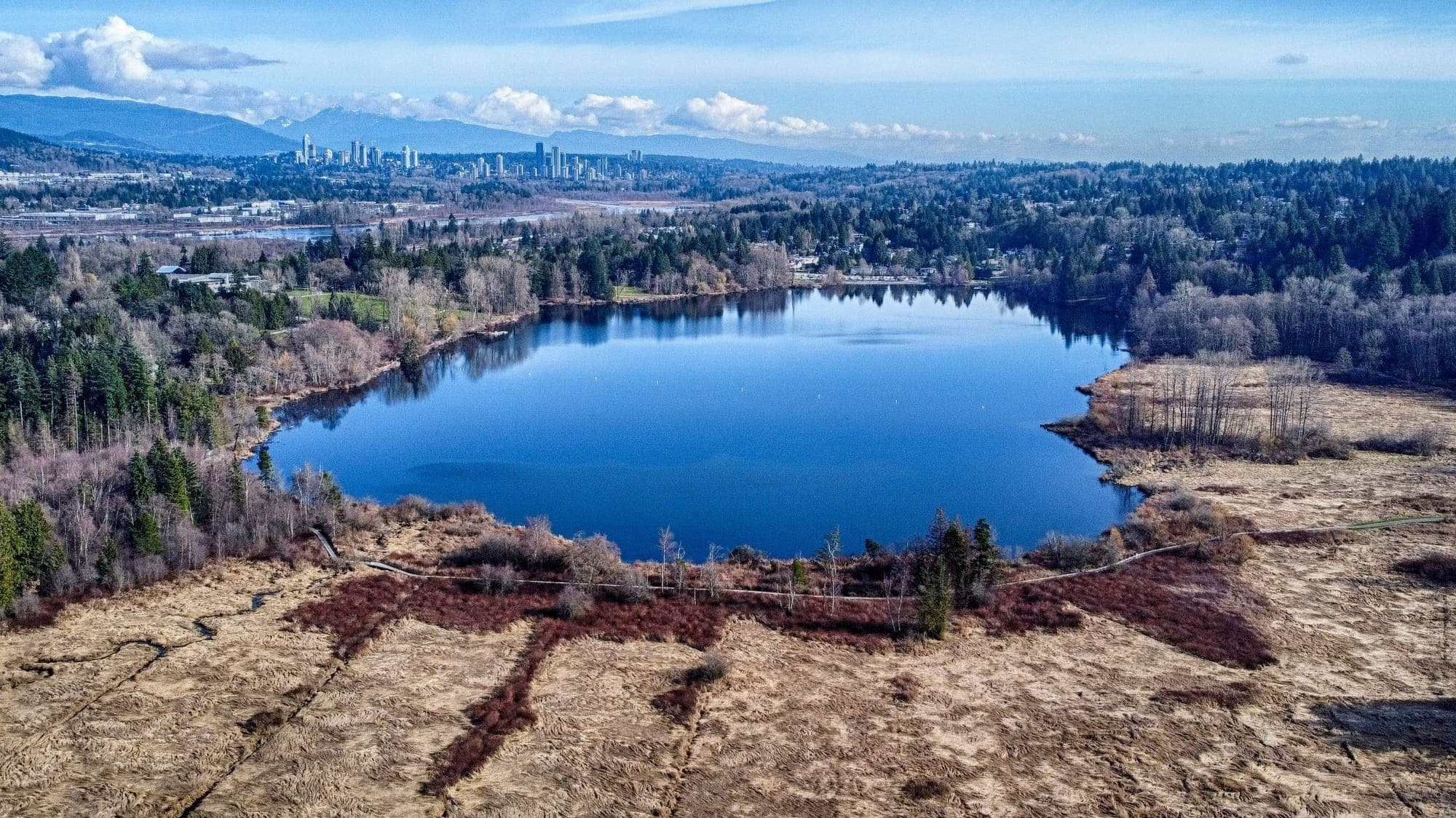
The city also quietly has some of the best green space per capita of any major Metro Vancouver city. Central Park (the one in Burnaby, not New York) is an 80-hectare urban forest immediately next to Metrotown station. Deer Lake, Burnaby Lake, and Burnaby Mountain together give residents a rare combination of dense urban living and easy access to forest and water. If you're the kind of newcomer who values walkable transit, decent rent, good schools, and a quiet forest within 10 minutes of your apartment, Burnaby is probably your answer.
Rankings

Which Burnaby neighbourhood is right for you?

Same neighbourhoods, three different questions. Pick the ranking that matches what matters to you — and we'll tell you which Burnaby neighbourhood comes out on top, and why.

Discover

Places in Burnaby that sell the city to visitors — and keep residents here.

Swipe or use the arrows →

Services in Burnaby

What things really cost here.

Local price ranges for the most-searched home services. Community submissions + researched quotes, updated regularly.

Getting around

Transit in Burnaby

Burnaby is served by both the Expo Line (running through the south of the city via Patterson, Metrotown, Royal Oak, and Edmonds) and the Millennium Line (running through the north via Gilmore, Brentwood, Holdom, Sperling, Lake City, Production Way, and the Lougheed interchange). More SkyTrain stations than any Metro Vancouver city except Vancouver itself. Beyond SkyTrain, the 144 Metrotown-SFU bus and 145 Production Way-SFU bus provide the main connection to Simon Fraser University on top of Burnaby Mountain. The city is split between Zone 1 (west Burnaby, roughly everything west of Willingdon or Edmonds) and Zone 2 (east Burnaby, including Lougheed and the SFU connection), so most commuters need 2-zone monthly passes.

SkyTrain lines
Expo LineMillennium Line
Major stations

Patterson · Metrotown · Royal Oak · Edmonds · Brentwood Town Centre · Gilmore · Holdom · Sperling–Burnaby Lake · Lake City Way · Production Way–University · Lougheed Town Centre

Schools & health

For families

Burnaby School District (SD 41) is one of the stronger public school districts in Metro Vancouver, consistently performing above the provincial average in both elementary and secondary grades. The district is home to Burnaby North Secondary and Burnaby Mountain Secondary, both of which rank well in BC provincial rankings. Burnaby also hosts Simon Fraser University — British Columbia's second-largest research university — on top of Burnaby Mountain, and BCIT (British Columbia Institute of Technology), the province's main applied trades and technology school, in the southwest corner of the city. Primary healthcare is delivered through Fraser Health, with Burnaby Hospital as the main acute care facility.

Public school district
Burnaby School District (SD 41)
Health authority
Fraser Health
Jump to Burnaby secondary schools

5 schools with programs, catchments, and BC Ministry of Education performance data.

Public secondary schools

Schools in Burnaby

The 5 most-asked-about Burnaby School District (SD 41) secondaries, with their programs, the catchment neighbourhoods they serve, and the BC Ministry of Education's own per-school graduation-assessment results where available. Catchment is determined by your home address — verify with the district's catchment lookup before any move.

What the program badges mean

BC public school programs explained

IB, AP, French Immersion, Mini School — what they are, who they suit, and how the application process works.

Show ▾

Standard catchment program (BC Dogwood) · Standard

The default open-enrolment program every BC public secondary runs. Open to anyone in catchment. Leads to the BC Dogwood Diploma — the standard provincial high-school graduation certificate, accepted by every Canadian university and most international ones.

International Baccalaureate (Diploma + Middle Years) · IB

Globally recognised academic programme run alongside or instead of BC Dogwood. The Diploma Programme (DP) is in Grades 11–12 with six subjects + a research essay; the Middle Years Programme (MYP) is in Grades 8–10 and feeds the DP. Application-based, citywide intake, heavier workload than Dogwood. Most useful for students applying to universities outside Canada.

Advanced Placement · AP

Subject-by-subject acceleration toward US-style college credit. Students pick individual AP courses (Calculus AB, English Literature, Chemistry, etc.) and write the AP exam in May. Less common in BC than IB, but useful for students with one or two subject strengths who don't want a full alternative diploma.

French Immersion (early or late entry) · French Immersion

Academic subjects delivered in French through Grade 12. Continuation of the elementary French Immersion program — students entering at the secondary level usually came from a feeder FI elementary. Bilingual graduates get a Dual Dogwood (BC + bilingual). Late immersion (Grade 6 entry) and early immersion (kindergarten entry) merge by secondary.

Mini School cohort programs · Mini School

Application-based four-year academic cohort that runs alongside the regular catchment program inside the same school. Each Mini School has its own theme — Tech (Templeton), Arts (Byng), Challenge (Hamber), academic-enriched (Kitsilano), etc. Open citywide via application; competitive admission with interviews and portfolios depending on theme.

Languages of instruction

Most BC public secondaries deliver subjects in English. French Immersion schools deliver core academic subjects (math, sciences, social studies) in French. A small number of VSB elementaries run Mandarin Bilingual programs feeding into specific secondaries (e.g., Eric Hamber's Mandarin Accelerated stream). Beyond that, languages appear as electives — Mandarin, Punjabi, Spanish, Japanese, and Korean are widely offered in Greater Vancouver depending on the local community.

Burnaby North Secondary

Secondary

Burnaby Heights / Capitol Hill catchment secondary, one of the largest and highest-performing SD41 schools, with a wide AP slate and strong arts/athletics tradition.

AP
Grades
812
Literacy Assessment 10 — Proficient or Extending
86.4%2023/2024 · 346 writers
VanGuide indicators
Programs 1/10 · Newcomer 7.5/10 · Transit 2/5

Catchment includes: Burnaby Heights (North Burnaby)

751 Hammarskjold Drive, Burnaby, BC V5B 4A1

Burnaby Mountain Secondary

Secondary

Burnaby Mountain catchment secondary, the SD41 French Immersion secondary, with strong SFU partnerships and a transit-accessible Lougheed-area location.

French Immersion
Grades
812
Literacy Assessment 10 — Proficient or Extending
80.7%2021/2022 · 228 writers
VanGuide indicators
Programs 2/10 · Newcomer 8.8/10 · Transit 3/5

Catchment includes: Lougheed

8800 Eastlake Drive, Burnaby, BC V3J 7X5

Moscrop Secondary

Secondary

Metrotown-area catchment secondary, transit-accessible to Patterson SkyTrain, with a strong academic tradition and AP slate.

AP
Grades
812
Literacy Assessment 10 — Proficient or Extending
87.7%2022/2023 · 284 writers
VanGuide indicators
Programs 1/10 · Newcomer 7.5/10 · Transit 3/5

Catchment includes: Metrotown

4433 Moscrop Street, Burnaby, BC V5G 2G3

Cariboo Hill Secondary

Secondary

Edmonds-area catchment secondary in southeast Burnaby, with a strong inclusive culture and athletics program in one of the city's most rapidly densifying corridors.

Grades
812
Literacy Assessment 10 — Proficient or Extending
80.6%2024/2025 · 160 writers
VanGuide indicators
Programs 1/10 · Newcomer 7.5/10 · Transit 2/5

Catchment includes: Lougheed

8580 16th Avenue, Burnaby, BC V3N 1S2

Alpha Secondary

Secondary

Burnaby Heights / Brentwood catchment secondary, transit-accessible to Brentwood SkyTrain, with a strong arts and athletics culture.

Grades
812
Literacy Assessment 10 — Proficient or Extending
78.5%2024/2025 · 260 writers
VanGuide indicators
Programs 1/10 · Newcomer 7.5/10 · Transit 3/5

Catchment includes: Burnaby Heights (North Burnaby), Brentwood

4600 Parker Street, Burnaby, BC V5C 3E2

We deliberately don't lead with a single Fraser Institute ranking number — within a few percentage points those ranks are statistical noise, and they leave out everything that matters about the day-to-day school experience. The official BC MoE per-school proficiency rates above are what the province itself publishes about how each school is doing.

Safety in Burnaby

Is Burnaby safe? A calibrated answer.

Burnaby sits in the middle of Metro Vancouver's safety distribution — quieter than Vancouver proper in most residential areas, with the kinds of urban concerns you'd expect at major transit hubs (Metrotown, Brentwood, Lougheed) where high foot traffic naturally attracts more property crime. Burnaby Mountain and the SFU residential areas are notably quiet; Deer Lake, Burnaby Heights, and the Capitol Hill area are established family neighbourhoods with low everyday crime. The city is policed by Burnaby RCMP, one of the largest detachments in BC.

Burnaby's Central Park on a clear afternoon — wide treed walking paths, families with kids, and the lawn bowling greens visible beyond, an everyday public-park scene in one of Burnaby's most-used civic spaces between Metrotown and the Patterson SkyTrain station.
Photo: Wikimedia Commons

Burnaby CMA

81.2

Crime Severity Index — 2024

Canada (all CMAs)

77.9

Crime Severity Index — 2024

How to read this

Burnaby is 3.3 points above the Canadian average. CSI weights crimes by sentencing severity, not just count.

Crime Severity Index — Vancouver CMA vs other major Canadian CMAs (2024)

Chilliwack BC141.7
Kamloops BC129.9
Winnipeg MB124.4
Edmonton AB110.2
Kelowna BC108.8
Calgary AB87.7
Vancouver BC81.2your CMA
Toronto ON71.5
Montreal QC67.4
Ottawa ON50.4

Canada national average: 77.9

Source:Statistics Canada· 2024

Areas the news cycle asks about

Honest characterisation

  • Metrotown

    The transit hub draws the property-crime profile of any large Canadian mall — car break-ins, occasional thefts inside the mall — but the residential towers around it are quiet and the SkyTrain station is well-lit and busy late.

  • Lougheed

    Lougheed's redevelopment from a 1980s mall into a residential neighbourhood is mostly complete; the area is busier and safer than it was a decade ago.

Targeting newcomers

Scams to know about in Burnaby

These follow a small number of repeating playbooks aimed at people who are new to the city, the country, or the rental market. None of them are unique to Burnaby, but the local versions are worth recognising in advance.

Craigslist & Marketplace rental scams

Particularly common for Metrotown and Brentwood high-rises advertised below market. Real Burnaby landlords show units in person; never wire money before signing.

Mall parking-lot smash-and-grabs

Metrotown, Brentwood, and Lougheed Town Centre lots see regular targeting around peak shopping hours. Trunk-store before arriving, not in the lot.

Door-to-door 'water-quality' or 'energy audit' scams

Sales reps claiming to be from BC Hydro or the city are common in established residential areas like Burnaby Heights. BC Hydro doesn't sell door-to-door. Refuse and report.

CRA & immigration phone scams

Robocalls demanding payment in gift cards. CRA and IRCC do not accept gift cards or threaten immediate arrest. Hang up.

International-student job-offer scams

Targets SFU and BCIT students in particular. Legitimate Canadian employers don't ask you to forward funds via crypto or wire transfer.

What to actually do

Practical safety tips for newcomers

  1. Metrotown SkyTrain station and the surrounding plaza are well-lit and busy until late; the area's the second-busiest transit interchange in the system after Granville. Use it without overthinking.
  2. Don't leave anything visible in cars parked at Metrotown, Brentwood, or Lougheed — the most common crime newcomers report in Burnaby.
  3. Burnaby Mountain and the SFU campus area: black bears are an annual reality from May through September. Don't leave food in cars overnight; never approach.
  4. Burnaby RCMP non-emergency line: 604-294-7922. The detachment publishes weekly community-policing reports.
  5. Deer Lake Park is safe day and night by every measure; main paths are lit and well-used. Trails on the south side close at dusk.
  6. If you live in a high-rise condo, check whether your building uses package-lockers — parcel theft from lobby tables is the most common 'theft from building' incident in Burnaby's tower-heavy neighbourhoods.

Safety is about probabilities, not guarantees, and reasonable newcomer caution applies anywhere. If something feels off, trust that instinct. For non-emergency police reports in Burnaby, use the local non-emergency police line; for emergencies always call 911.

Weather & seasons

Best time to visit Burnaby.

Burnaby's climate is essentially the same as Vancouver's — mild, wet winters and warm dry summers. The city is slightly warmer in summer than Vancouver proper because it's further inland, and the upper elevations of Burnaby Mountain are noticeably cooler and windier than the lower neighbourhoods. Snow is uncommon and usually melts within a day, but Burnaby Mountain gets snow more often than Vancouver because of its 283-metre elevation.

Annual rainfall
1323 mm
Jan avg high
6°C
July avg high
22°C

When to come

May through September is the best window — warm, dry, and all the outdoor attractions (Deer Lake swimming, Burnaby Mountain hiking, Central Park) are at their best. The Burnaby Blues + Roots Festival at Deer Lake Park in early August is a free summer highlight. December is the other peak — the Heritage Christmas display at the Burnaby Village Museum is one of the best in the region.

Getting here

From YVR airport, take the Canada Line SkyTrain to Bridgeport Station and transfer to the 430 bus or continue to Waterfront and transfer to the Expo Line. Direct transit time to Metrotown is about 45–55 minutes. A taxi or ride-share from YVR to Metrotown runs $40–55 depending on traffic.

The Peace Arch border crossing is about 50 minutes south of Burnaby via Highway 99 and Highway 1. Amtrak Cascades from Seattle stops at Pacific Central Station in Vancouver, about 25 minutes from Burnaby on the Expo Line.

Common questions

What newcomers ask about Burnaby.

Is Burnaby cheaper than Vancouver?

Yes — noticeably, though less dramatically than Surrey. CMHC's 2023 data puts a Burnaby two-bedroom purpose-built rental at $2,062 vs Vancouver's $2,181. On the secondary market the gap is typically $300–500 per month in favour of Burnaby for equivalent units. The biggest savings are outside the Metrotown and Brentwood cores — Edmonds, Lougheed, and Burnaby Heights have some of the best-value rental buildings in Metro Vancouver.

How long does it take to commute from Burnaby to downtown Vancouver?

From Metrotown station to Waterfront is about 25 minutes on the Expo Line. From Brentwood Town Centre to Waterfront is about 20 minutes via the Millennium Line and a transfer at Commercial–Broadway. Driving during rush hour is variable, typically 30–45 minutes depending on the route and traffic.

Is Burnaby a good place for students at SFU or BCIT?

Burnaby is genuinely the best place to live in Metro Vancouver if you're studying at SFU or BCIT. SFU has on-campus housing at UniverCity on top of Burnaby Mountain, and Lougheed Town Centre is the cheapest off-campus neighbourhood with direct bus access to the university. For BCIT students, the Edmonds and Brentwood areas are well-connected and have abundant rental stock.

What's the difference between Metrotown and Brentwood?

Metrotown is older, denser, more established, and centred on the Metropolis shopping mall on the Expo Line. Brentwood is newer, still under construction, centred on the Amazing Brentwood development on the Millennium Line, and has a more modern master-planned feel. Metrotown is better for commuting to downtown Vancouver; Brentwood is better if you want new construction and don't mind being under construction for a few more years.

Is Burnaby Mountain worth visiting?

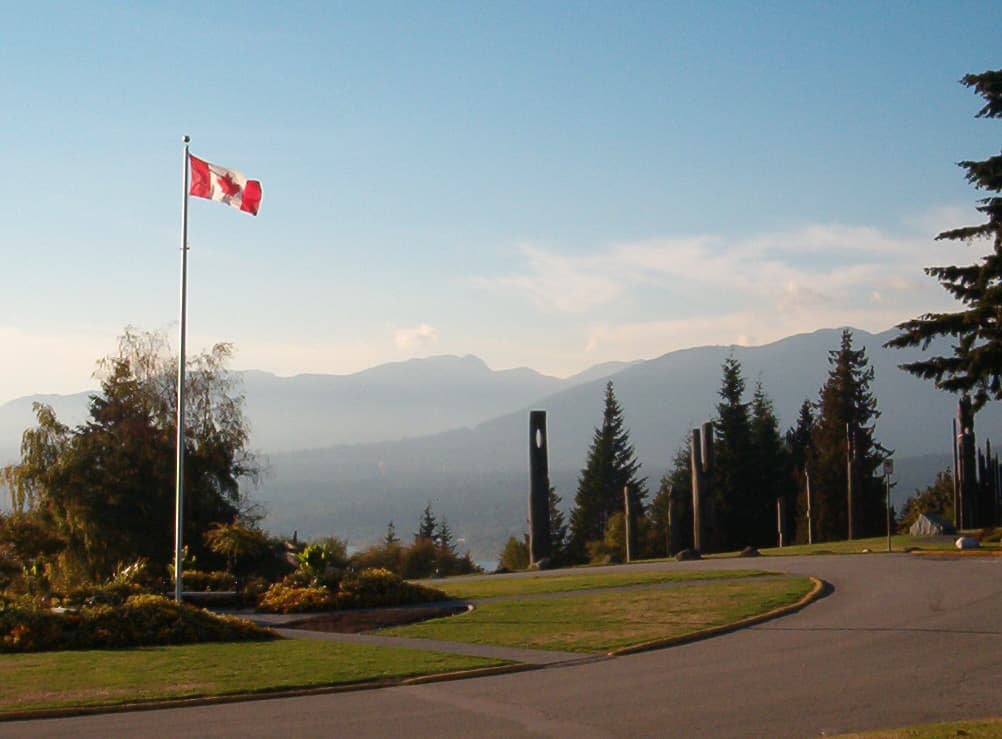
Yes — the views alone are worth the trip. SFU's brutalist campus is one of the most architecturally significant buildings in British Columbia, and the free 145 bus from Production Way-University SkyTrain station runs directly to the summit every 10 minutes. Sunset from the Centennial Rose Garden at the top is one of the best views in Metro Vancouver.

Which Burnaby neighbourhood has the best food?

Metrotown and Crystal Mall have the best and most affordable Chinese food scene outside of Richmond. North Burnaby (along Hastings Street in Burnaby Heights) has the largest Persian and Italian food scene in Metro Vancouver. Brentwood has newer, trendier restaurants aimed at the young-professional condo market. For day-to-day food diversity, Metrotown wins by volume.

Do I need a car in Burnaby?

If you live near a SkyTrain station (Metrotown, Brentwood, Lougheed, Production Way, Edmonds) you can comfortably live without one. If you live in the suburban parts of South Burnaby, Government Road, or Capitol Hill in North Burnaby, a car is more practical — the bus service is adequate but not as frequent as the SkyTrain corridor.

Is Burnaby safe?

Burnaby is generally very safe by major-city standards. Crime rates are below the Metro Vancouver average in most categories, with the main concern being auto theft and car break-ins around Metrotown and other SkyTrain stations — park in secured underground lots where possible. Violent crime is uncommon across the city.

What's the Burnaby School District like?

Burnaby School District (SD 41) is one of the stronger public school districts in BC, with results consistently above the provincial average. Burnaby North Secondary and Burnaby Mountain Secondary are the two highest-ranked public high schools. The district also has a significant French immersion program and strong ELL (English Language Learner) support, reflecting Burnaby's 52% foreign-born population.

What's the $10-a-day daycare situation in Burnaby?

Burnaby has many licensed daycares participating in BC's $10-a-day program, with a mix across Metrotown, Brentwood, Lougheed, and the residential areas. As with the rest of Metro Vancouver, the challenge isn't the rate, it's the waitlist — apply to multiple centres early and apply to the Affordable Child Care Benefit (separate income-tested subsidy) regardless of whether you secure a $10-a-day spot.

Plan further

Ready to visit or move to Burnaby?

If you're planning a visit, there are hour-by-hour itineraries with cited costs. If you're planning a move, the cost-of-living breakdown and the newcomer essentials guides are the next stops.

Keep exploring

Cities near Burnaby.

Greater Vancouver is a collection of very different cities, each with its own rhythm, rents, and food scene. If you're comparing or planning a move, these are the obvious ones to look at next.