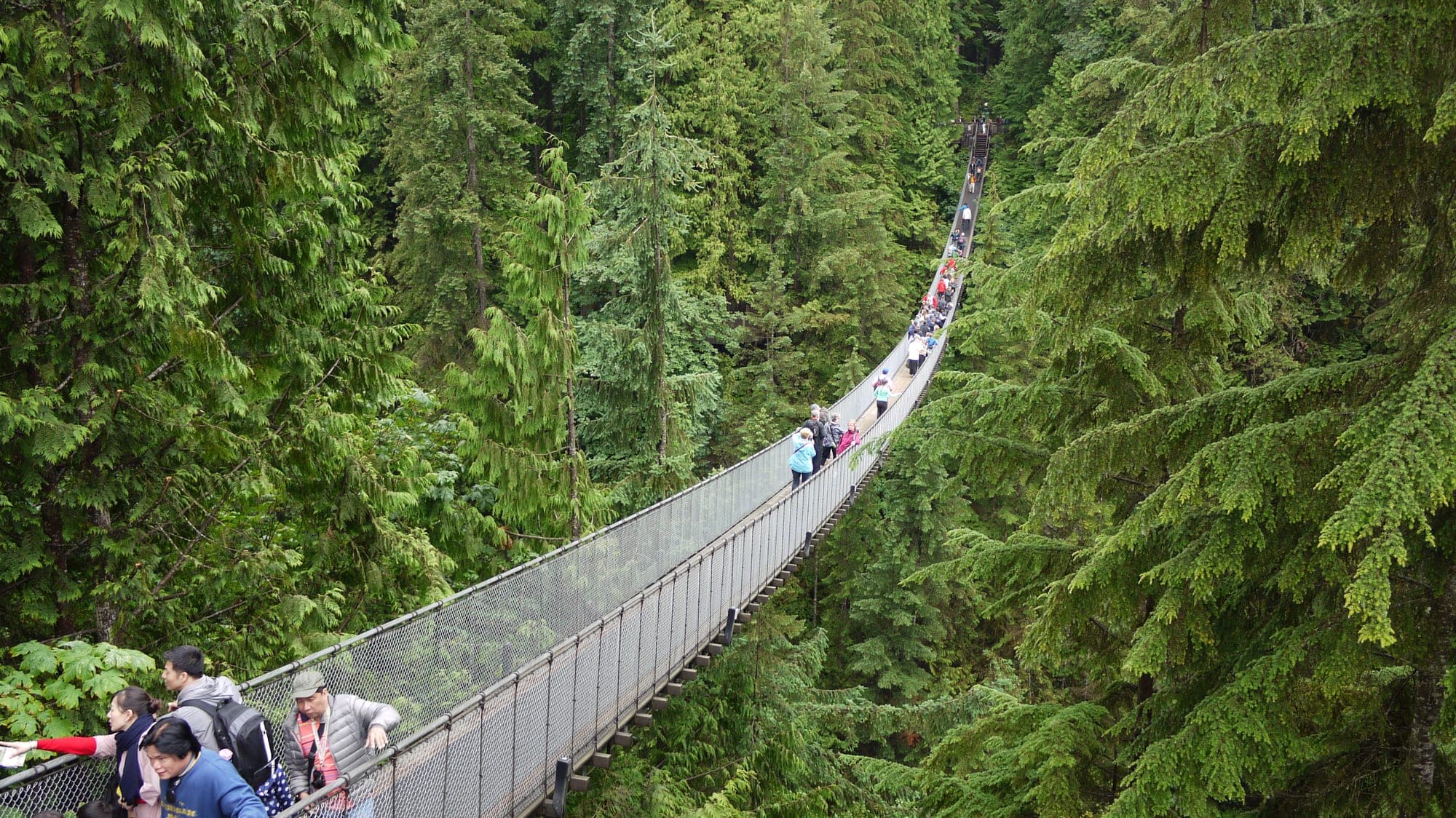
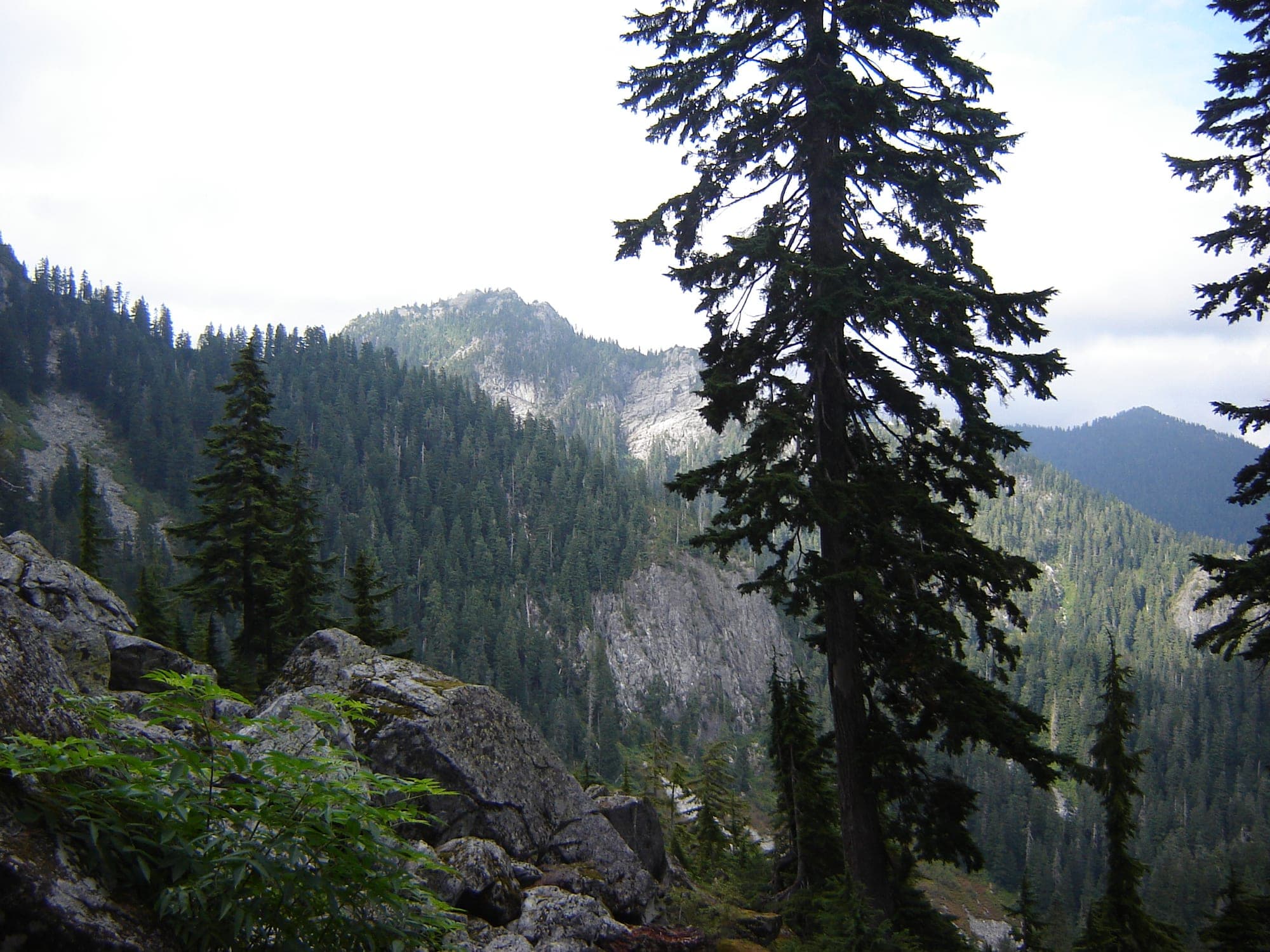
landmarkCapilano Suspension Bridge Park
A 140-metre pedestrian suspension bridge hanging 70 metres above the Capilano River — one of British Columbia's most famous attractions since 1889.

The outdoor side of Metro Vancouver — mountains, suspension bridges, and the only corner of the region where the forest is louder than the traffic.
Living in North Vancouver
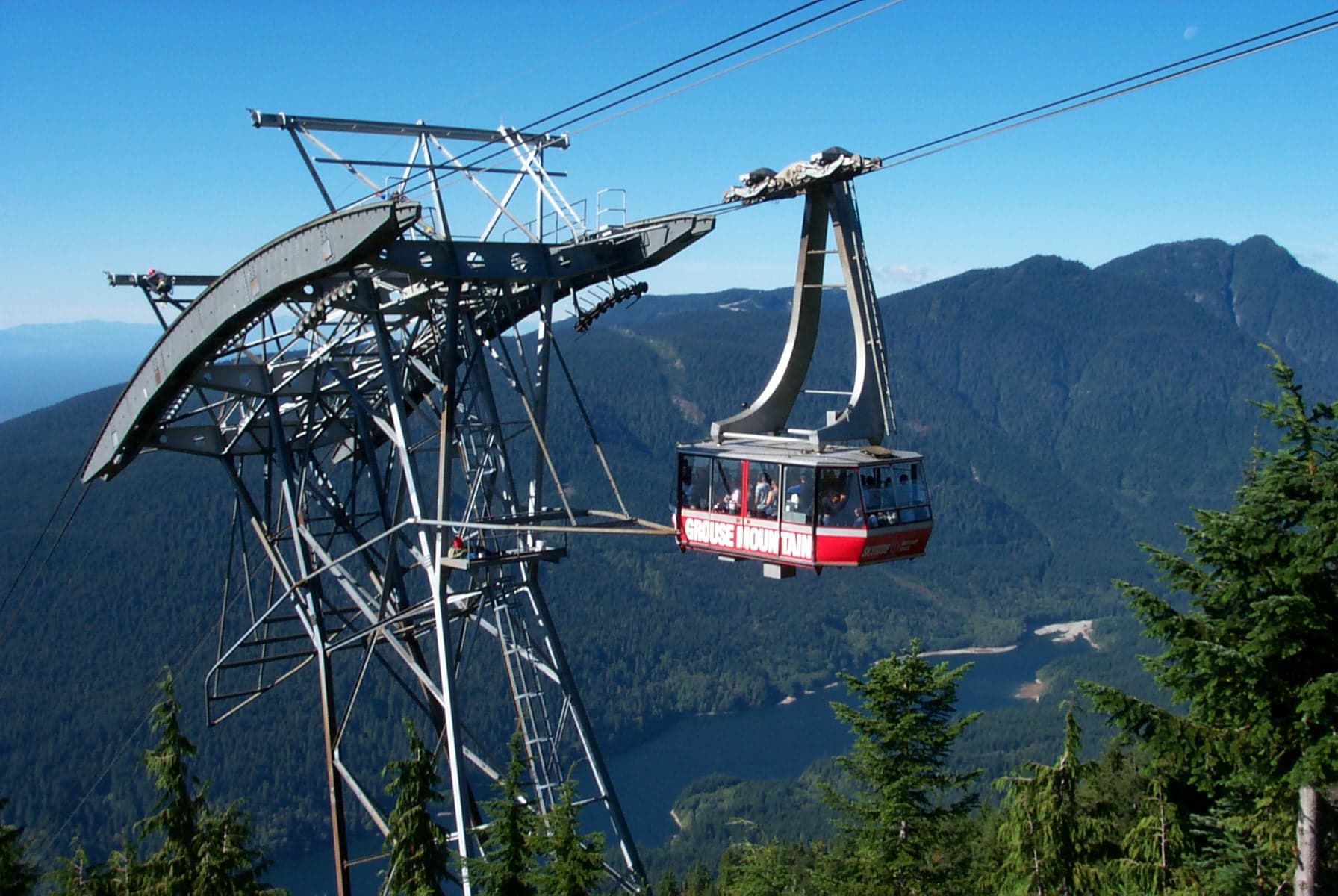
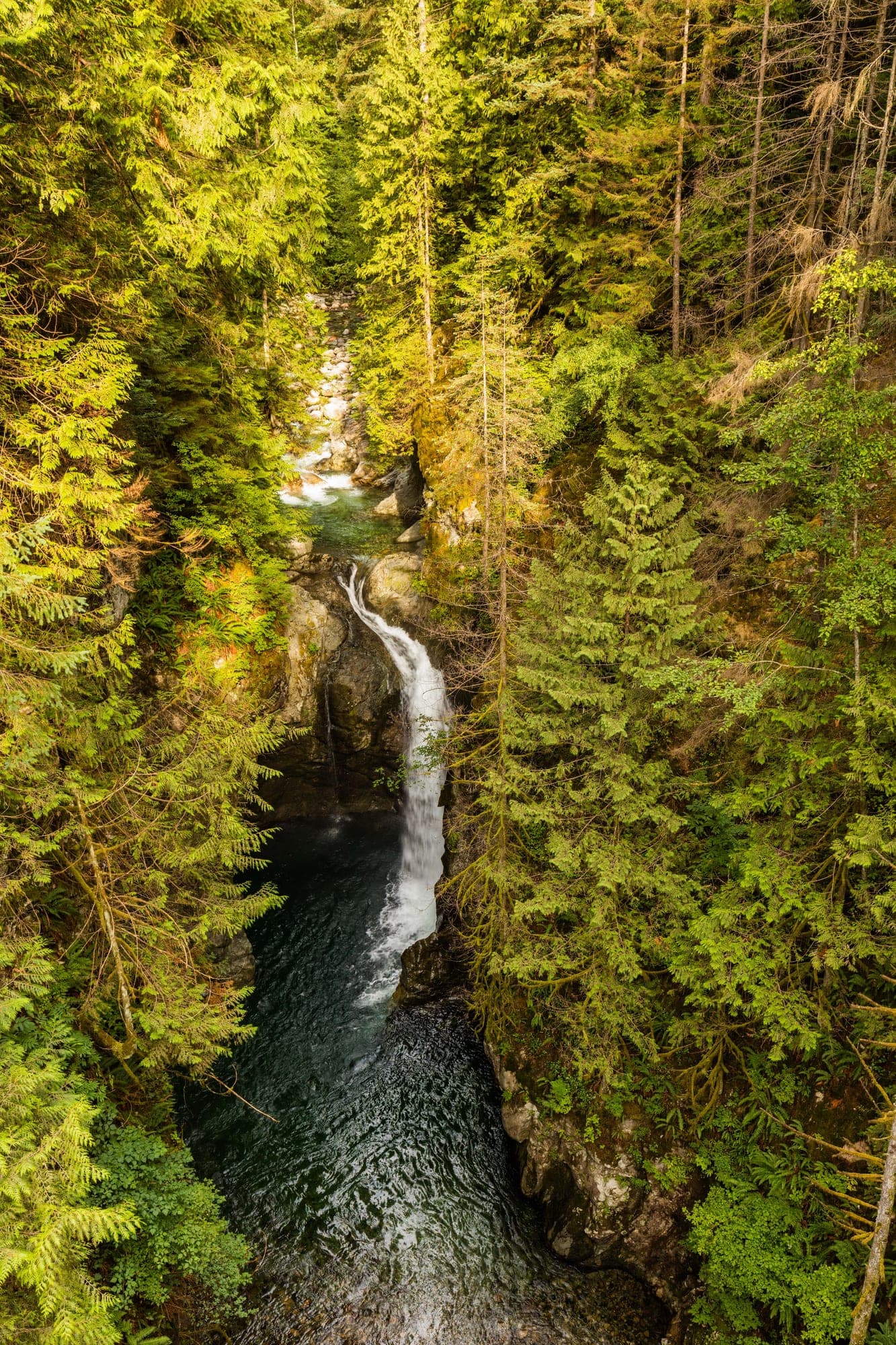
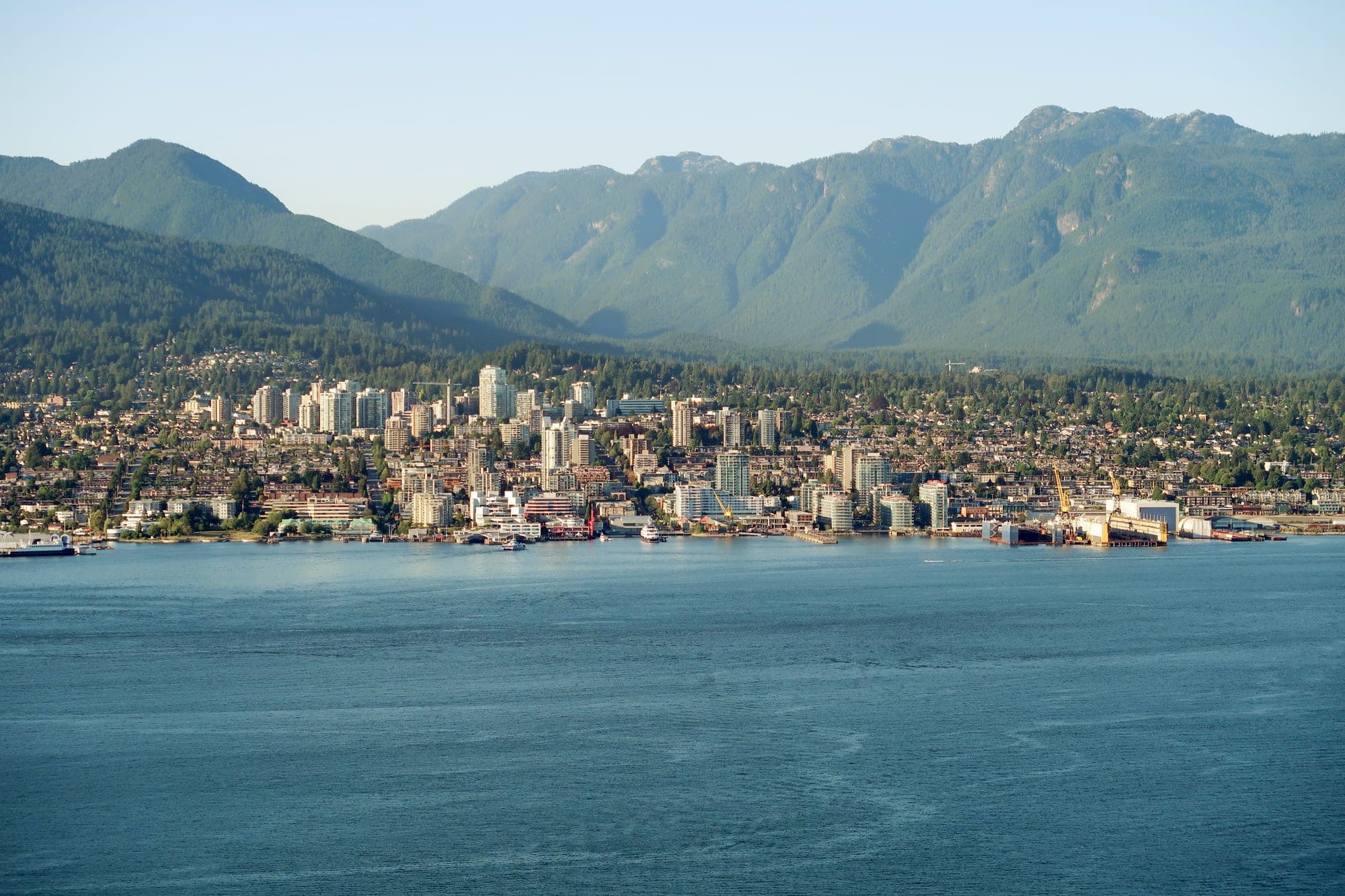
North Vancouver isn't one place, it's two: the City of North Vancouver (the small urban core around Lonsdale) and the District of North Vancouver (the larger surrounding suburbs on the slopes of the Coast Mountains). Together they have about 146,000 residents and form the most outdoor-oriented corner of Metro Vancouver. Within 15 minutes of almost any North Vancouver address, you can be at a trailhead climbing into old-growth forest, on a beach kayaking into Indian Arm, at the Capilano or Lynn Canyon Suspension Bridge, or on top of Grouse Mountain looking south across the city to Washington State.
The North Shore has a very specific character that's different from the rest of Metro Vancouver. Incomes are higher (median household income is close to $110,000), the population is older and less immigrant-heavy (about 35% foreign-born, lower than Vancouver, Surrey, Burnaby, or Richmond), and the community tilts toward outdoor-active, tech-worker, and young-family households. The Iranian-Canadian community in North Vancouver is the largest in Canada — roughly one in ten North Shore residents speaks Persian as a mother tongue, and the restaurant scene along Lonsdale reflects it.
The trade-off is the commute. North Vancouver has no SkyTrain — the only fast transit across Burrard Inlet is the SeaBus, which runs every 15 minutes from Lonsdale Quay to Waterfront Station in downtown Vancouver (a 12-minute crossing). Beyond that, you're on a bus or driving across the Lions Gate or Ironworkers Memorial bridges, both of which are notorious rush-hour bottlenecks. If your job is in downtown Vancouver and the SeaBus works for you, North Van is genuinely one of the best places to live in the region. If you need to get to Burnaby, Richmond, or Surrey for work, it's a painful choice.
Where to live
The waterfront end of Lonsdale Avenue — SeaBus, the Shipyards plaza, and the densest walkable neighbourhood on the North Shore.
The commercial heart of North Vancouver City — apartment buildings, Lonsdale shops, and direct bus access to both the SeaBus and Grouse Mountain.
The forested heart of North Vancouver District — Lynn Canyon on the doorstep, good schools, and family-oriented single-family streets.
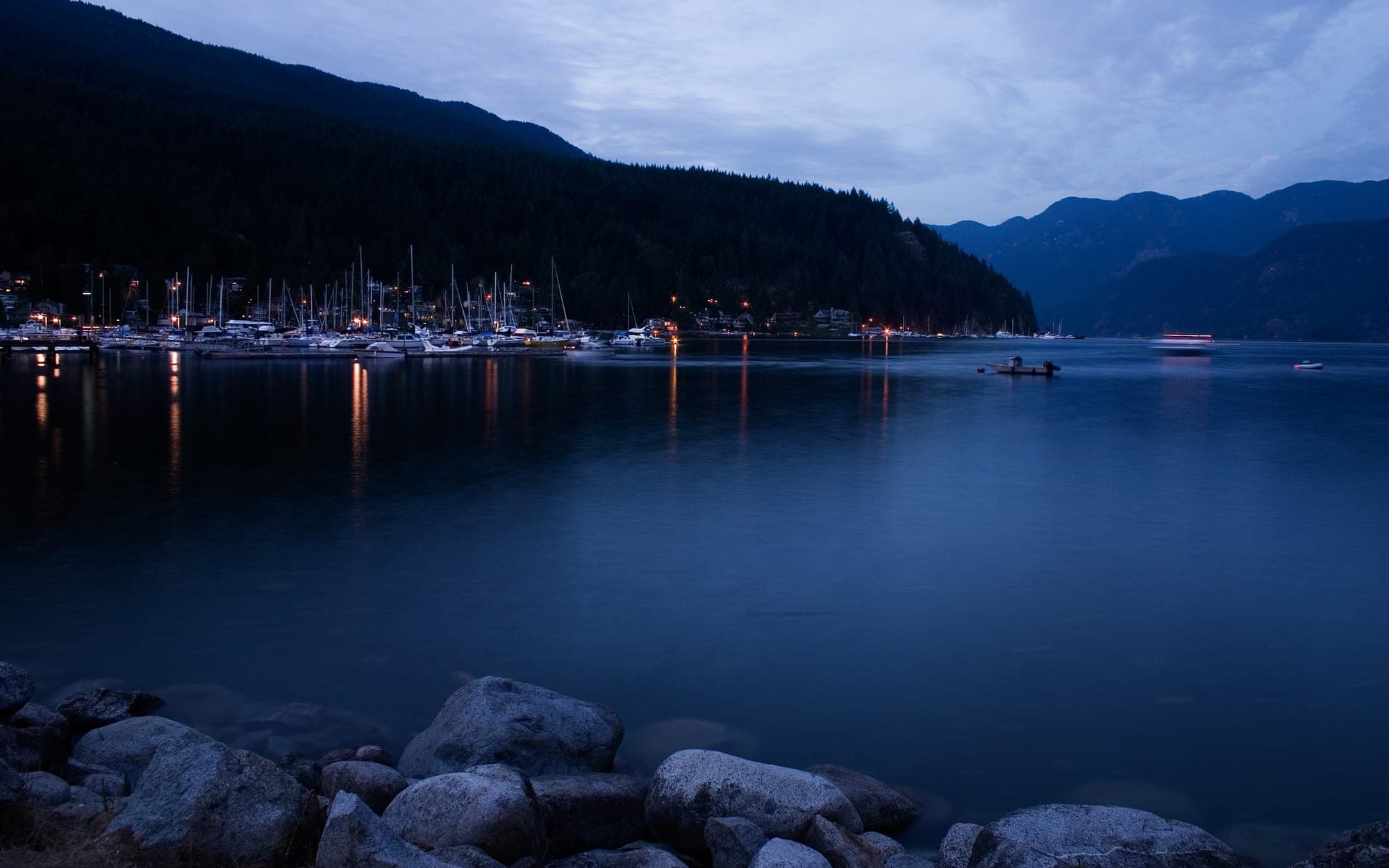
A small seaside village tucked into the mouth of Indian Arm — kayak rentals, heritage cabins, and some of the best morning views in the region.
Rankings
Same neighbourhoods, three different questions. Pick the ranking that matches what matters to you — and we'll tell you which North Vancouver neighbourhood comes out on top, and why.
Discover
Swipe or use the arrows →
Services in North Vancouver
Local price ranges for the most-searched home services. Community submissions + researched quotes, updated regularly.
Food in North Vancouver
Getting around
North Vancouver has no SkyTrain. The primary fast transit connection to the rest of Metro Vancouver is the SeaBus — two catamaran ferries that cross Burrard Inlet between Lonsdale Quay and Waterfront Station in downtown Vancouver every 10–15 minutes, with each crossing taking 12 minutes. The SeaBus is one of the best transit experiences in the region: cheap (1-zone fare, about $3.25), fast, and genuinely scenic. Beyond the SeaBus, North Van is served by local buses running up Lonsdale Avenue (229 and 239), across to Grouse Mountain (236), to Lynn Valley (228), and to Deep Cove (211). Rush-hour bus service across the Lions Gate Bridge and Ironworkers Memorial Bridge is reliable but subject to bridge traffic, which can add 20–30 minutes during peak periods.
Lonsdale Quay SeaBus Terminal
Schools & health
North Vancouver School District (SD 44) is consistently one of the highest-ranked public school districts in British Columbia, regularly placing in the top three of the Fraser Institute's provincial rankings. Argyle Secondary (in Lynn Valley) and Handsworth Secondary (in the Edgemont area) are two of the best-performing public high schools in the province. The district has a strong International Baccalaureate (IB) program at Carson Graham Secondary in central North Vancouver, and its French Immersion program is one of the largest in Metro Vancouver. Primary healthcare is delivered through Vancouver Coastal Health, with Lions Gate Hospital in central North Vancouver as the main acute care facility serving the entire North Shore.
5 schools with programs, catchments, and BC Ministry of Education performance data.
Public secondary schools
The 5 most-asked-about North Vancouver School District (SD 44) secondaries, with their programs, the catchment neighbourhoods they serve, and the BC Ministry of Education's own per-school graduation-assessment results where available. Catchment is determined by your home address — verify with the district's catchment lookup before any move.
What the program badges mean
IB, AP, French Immersion, Mini School — what they are, who they suit, and how the application process works.
Standard catchment program (BC Dogwood) · Standard
The default open-enrolment program every BC public secondary runs. Open to anyone in catchment. Leads to the BC Dogwood Diploma — the standard provincial high-school graduation certificate, accepted by every Canadian university and most international ones.
International Baccalaureate (Diploma + Middle Years) · IB
Globally recognised academic programme run alongside or instead of BC Dogwood. The Diploma Programme (DP) is in Grades 11–12 with six subjects + a research essay; the Middle Years Programme (MYP) is in Grades 8–10 and feeds the DP. Application-based, citywide intake, heavier workload than Dogwood. Most useful for students applying to universities outside Canada.
Advanced Placement · AP
Subject-by-subject acceleration toward US-style college credit. Students pick individual AP courses (Calculus AB, English Literature, Chemistry, etc.) and write the AP exam in May. Less common in BC than IB, but useful for students with one or two subject strengths who don't want a full alternative diploma.
French Immersion (early or late entry) · French Immersion
Academic subjects delivered in French through Grade 12. Continuation of the elementary French Immersion program — students entering at the secondary level usually came from a feeder FI elementary. Bilingual graduates get a Dual Dogwood (BC + bilingual). Late immersion (Grade 6 entry) and early immersion (kindergarten entry) merge by secondary.
Mini School cohort programs · Mini School
Application-based four-year academic cohort that runs alongside the regular catchment program inside the same school. Each Mini School has its own theme — Tech (Templeton), Arts (Byng), Challenge (Hamber), academic-enriched (Kitsilano), etc. Open citywide via application; competitive admission with interviews and portfolios depending on theme.
Languages of instruction
Most BC public secondaries deliver subjects in English. French Immersion schools deliver core academic subjects (math, sciences, social studies) in French. A small number of VSB elementaries run Mandarin Bilingual programs feeding into specific secondaries (e.g., Eric Hamber's Mandarin Accelerated stream). Beyond that, languages appear as electives — Mandarin, Punjabi, Spanish, Japanese, and Korean are widely offered in Greater Vancouver depending on the local community.
Lynn Valley catchment secondary, consistently among the top-performing public schools in BC, with a strong AP slate and a quiet North Shore catchment.
Catchment includes: Lynn Valley
1131 Frederick Road, North Vancouver, BC V7K 1K2
Edgemont/Forest Hills catchment secondary on the North Shore, consistently among BC's top public schools, with a wide AP slate and a strong athletics tradition.
Catchment includes: Lynn Valley
1044 Edgewood Road, North Vancouver, BC V7R 1Y9
Central Lonsdale catchment secondary, the SD44 International Baccalaureate Diploma school, with citywide IB intake and a transit-accessible Lonsdale corridor location.
Catchment includes: Central Lonsdale
2145 Jones Avenue, North Vancouver, BC V7M 2W7
Central / Lower Lonsdale catchment secondary, the SD44 French Immersion secondary, with a wide AP slate and one of the most transit-accessible North Shore school locations.
Catchment includes: Central Lonsdale, Lower Lonsdale & The Shipyards
1860 Sutherland Avenue, North Vancouver, BC V7L 4C2
Deep Cove catchment secondary, the smallest North Shore SD44 secondary, with a tight community feel and an outdoor-education focus tied to the surrounding trails.
Catchment includes: Deep Cove
1204 Caledonia Avenue, North Vancouver, BC V7G 2A5
Official district website
North Vancouver School District (SD 44) ↗
Catchment lookup, registration, programs, and the authoritative source for any policy change.
Performance data source
BC Ministry of Education — Graduation Assessments ↗
We surface the latest non-masked-cohort year per metric; data retrieved 2026-04-17.
We deliberately don't lead with a single Fraser Institute ranking number — within a few percentage points those ranks are statistical noise, and they leave out everything that matters about the day-to-day school experience. The official BC MoE per-school proficiency rates above are what the province itself publishes about how each school is doing.
Safety in North Vancouver
North Vancouver is among the quietest jurisdictions in all of Metro Vancouver. The District and the City together are policed by North Vancouver RCMP, and per-capita crime rates have been consistently below the Metro Vancouver average for a decade. The realistic safety considerations are not crime — they're the back-country: bears in Lynn Valley and Deep Cove year-round, cougar sightings on the trails above Lynn Canyon, and avalanche risk on Mt Seymour and Grouse Mountain in winter. Lower Lonsdale and the Shipyards area are safe day and night by every measure.

North Vancouver CMA
81.2
Crime Severity Index — 2024
Canada (all CMAs)
77.9
Crime Severity Index — 2024
How to read this
North Vancouver is 3.3 points above the Canadian average. CSI weights crimes by sentencing severity, not just count.
Canada national average: 77.9
Quietest by every common-sense measure
Areas the news cycle asks about
Targeting newcomers
These follow a small number of repeating playbooks aimed at people who are new to the city, the country, or the rental market. None of them are unique to North Vancouver, but the local versions are worth recognising in advance.
Common for Lower Lonsdale and Shipyards rentals advertised below market. Real North Vancouver landlords show units in person; never send money before viewing and signing.
Common in Lynn Valley and central residential streets — fake inspectors who 'discover' damage and demand same-day repair. Legitimate contractors carry District of North Vancouver business licences. Ask and verify.
Same playbook as the rest of Canada: robocalls demanding gift-card payment. The CRA does not accept gift cards. Hang up.
Mt Seymour, Lynn Canyon, and Grouse parking lots see regular smash-and-grab targeting weekend hikers. Don't leave anything visible — ever.
What to actually do
Safety is about probabilities, not guarantees, and reasonable newcomer caution applies anywhere. If something feels off, trust that instinct. For non-emergency police reports in North Vancouver, use the local non-emergency police line; for emergencies always call 911.
Weather & seasons
North Vancouver has the wettest climate of any Metro Vancouver city — by a significant margin. The North Shore mountains force incoming Pacific weather systems to rise and drop their precipitation, which means the slopes get about twice the annual rainfall of downtown Vancouver. The upper elevations around Grouse and Seymour get significant snow in winter, which is why the ski hills exist. Summers are slightly cooler than Vancouver's because of the forest cover and elevation, but still warm and mostly dry.
June through September for the outdoor attractions (hiking, Deep Cove kayaking, Grouse summit). December through February for skiing at Grouse, Cypress, or Seymour. October and April are the quietest shoulder months but also the wettest — come prepared for rain.
From YVR airport, take the Canada Line SkyTrain to Waterfront station, then walk to the SeaBus terminal and ride across to Lonsdale Quay — total trip about 60 minutes. A taxi or ride-share from YVR to Lower Lonsdale runs $50–65 depending on traffic and time of day.
About 75 minutes from the Peace Arch crossing via Highway 99 through downtown Vancouver and across the Lions Gate Bridge. Amtrak Cascades from Seattle stops at Pacific Central Station in downtown Vancouver, about 30 minutes from Lonsdale Quay via transit.
Common questions
Only if you live in Lower Lonsdale or Central Lonsdale, specifically. The SeaBus plus the Lonsdale bus corridor make the city of North Vancouver genuinely walkable and transit-connected. Outside that core — Lynn Valley, Deep Cove, Edgemont, Blueridge, the District generally — a car is strongly recommended. The bus service exists but is infrequent and subject to bridge traffic.
They're two separate municipalities with separate city halls, separate councils, and separate tax rates. The City of North Vancouver is the small urban core (12 km², 58k people) around Lonsdale Avenue. The District of North Vancouver is the larger suburban and mountain area surrounding the City (161 km², 88k people) — it includes Lynn Valley, Deep Cove, and most of the North Shore mountains. Newcomers rarely need to distinguish them in daily life, but they matter for property tax, permits, and local elections.
The SeaBus takes 12 minutes to cross Burrard Inlet between Lonsdale Quay and Waterfront Station. Two ferries run simultaneously during peak hours, so sailings depart every 10 minutes during rush hour and every 15 minutes off-peak. It's arguably the best transit experience in the Metro Vancouver region — fast, scenic, and reliable.
It's more expensive than Surrey, Coquitlam, or most of Burnaby, but slightly cheaper than the City of Vancouver itself. CMHC's 2023 data puts a North Shore 2-bedroom rental at $2,238 vs Vancouver's $2,181 — almost identical. Detached houses are the expensive part: median house prices in North Van are very high because of the limited supply and the outdoor lifestyle premium.
Grouse has the best views (right above downtown) and the best après-ski but is more expensive. Cypress has the most terrain and the longest runs — favoured by serious skiers. Mount Seymour is the smallest, cheapest, and most family-friendly, with the best tube park. All three are 30-45 minutes from downtown Vancouver. For first-timers, Mount Seymour is the easiest entry point.
For first-time visitors to Vancouver, yes. The park is more than just the bridge — the Treetops Adventure, the Cliffwalk, and the First Nations cultural centre are all excellent, and the full visit takes 2-3 hours. For locals and repeat visitors, the free Lynn Canyon Suspension Bridge (20 minutes east) is genuinely a good alternative, just without the Treetops and Cliffwalk additions. If you have the budget, Capilano is the better experience; if you don't, Lynn Canyon is nearly as dramatic and free.
North Vancouver has the largest Iranian-Canadian community in Canada. Persian is the #1 non-English, non-French mother tongue in the district, and the Iranian restaurants, grocery stores, and services along Central Lonsdale are deep and authentic. For newcomers from Iran specifically, North Vancouver is often the most natural landing point in Canada.
North Vancouver is on the Cascadia subduction zone like the rest of Metro Vancouver, so earthquake risk is present but not elevated compared to the region. The specific North Shore risk is debris flow and landslides — steep forested slopes above residential neighbourhoods occasionally fail during heavy rain events. The District of North Vancouver has a monitoring program and specific risk zones are mapped; check the District's hazard map before buying a house in certain areas. Day-to-day life is unaffected.
Noticeably worse. Lower Lonsdale gets about 1,400 mm of annual rain, Lynn Valley closer to 1,700 mm, and the upper slopes of Grouse and Seymour well over 2,000 mm. For reference, downtown Vancouver is around 1,189 mm. If the rain in Vancouver already bothers you, North Van will bother you more. On the other hand, the extra rain is what makes the rainforest so dense and the skiing so good.
North Vancouver School District (SD 44) is consistently ranked in the top 3 public school districts in British Columbia. Argyle Secondary in Lynn Valley and Handsworth Secondary in Edgemont are among the highest-performing public high schools in the province. The district also has a strong International Baccalaureate program at Carson Graham and a large French Immersion program. For families prioritising public schools, the North Shore is one of the strongest choices in Metro Vancouver.
Plan further
If you're planning a visit, there are hour-by-hour itineraries with cited costs. If you're planning a move, the cost-of-living breakdown and the newcomer essentials guides are the next stops.
Monthly budget
Line-by-line monthly budget with cited rent, groceries, transit, and hydro numbers.
Day trips
Honest day-trip plans with BC Ferries and Sea-to-Sky Highway directions.
Newcomer guides
Step-by-step essentials for the first month in BC — cited and dated.
Keep exploring
Greater Vancouver is a collection of very different cities, each with its own rhythm, rents, and food scene. If you're comparing or planning a move, these are the obvious ones to look at next.
Downtown cores, historic neighbourhoods, and the densest food scene in BC.
Quiet suburbs, Metrotown shopping, and SFU on the mountain.
Home to the best Chinese food in North America and Steveston village.