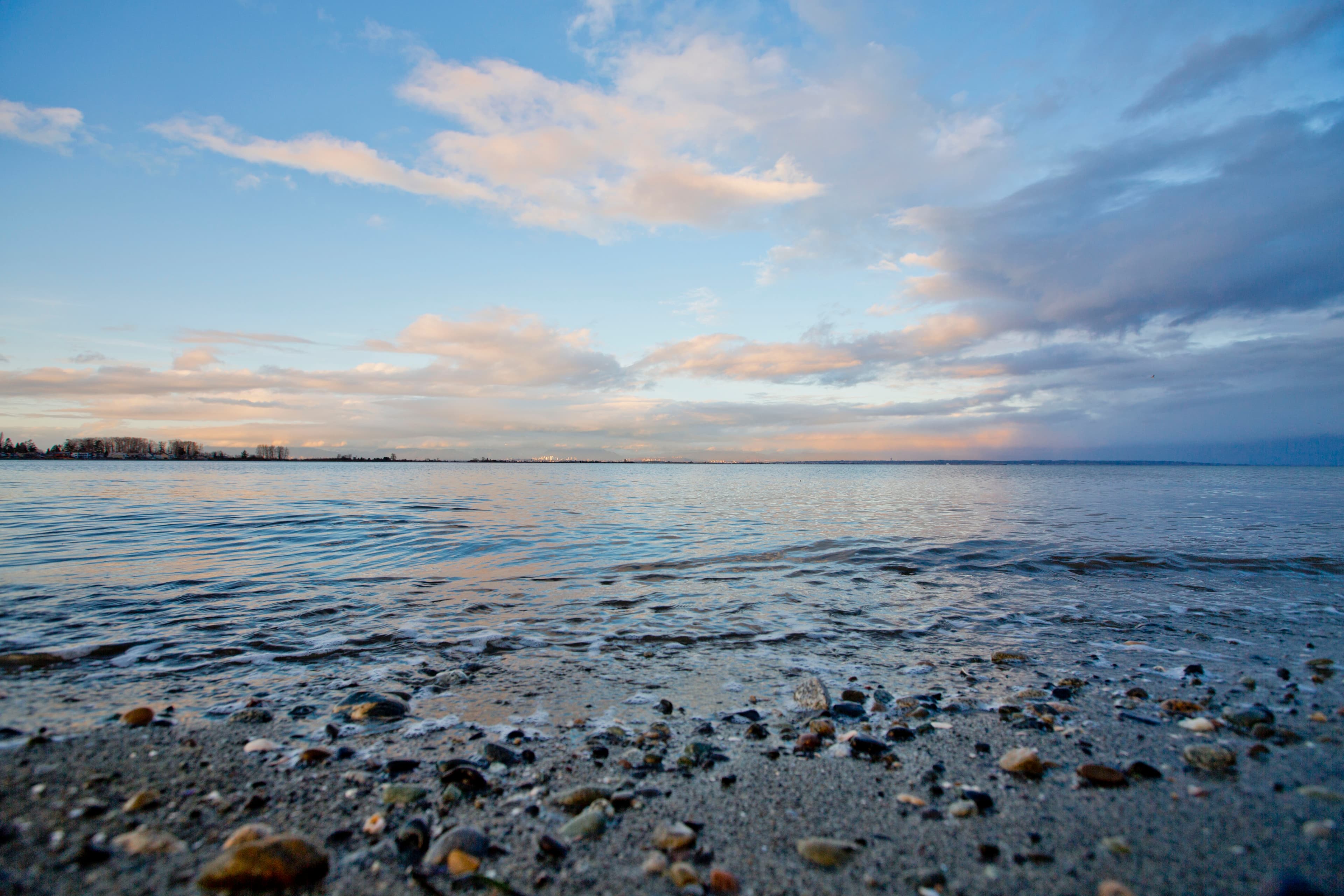
beachBoundary Bay Regional Park
One of the best beach-walking parks in Metro Vancouver — tidal flats, shorebirds, and 16 kilometres of dyke trail along the edge of Tsawwassen.

Three communities on the Fraser — North Delta's South Asian hub, Ladner's heritage farming village, and Tsawwassen's ferry-reachable coast.
Living in Delta
Delta is three cities pretending to be one. The City of Delta occupies 180 square kilometres along the south arm of the Fraser River — three-quarters of which is agricultural land, Burns Bog (the largest domed peat bog on the west coast of the Americas), or the Boundary Bay tidal flats. The other quarter is where the 108,455 residents live, and they live in three physically separated and culturally distinct communities: North Delta, Ladner, and Tsawwassen.
North Delta is the dense urban half, concentrated along the 72nd Avenue and Scott Road corridors at the southern edge of Surrey. It has 56 percent of Delta's population on less than 20 percent of the land, and it has the highest South Asian population share of any neighbourhood we cover — over 35 percent of North Delta residents identify as South Asian, and Punjabi is the single most-spoken mother tongue. Scott Road's commercial strip (shared with Surrey's Newton area) is one of the largest Punjabi retail districts in North America. Ladner is the exact opposite — a preserved heritage farming village of roughly 26,800 people along the Fraser River's south arm, with a Clock Tower village centre, Captain's Cove Marina, and housing stock that ranges from 1900s heritage houses to 1970s riverfront cul-de-sacs. Tsawwassen, the southernmost community (population 20,933), sits on the coastal bluffs above Boundary Bay with ferry terminals connecting to Victoria and Nanaimo; it calls itself "the sunniest place in Metro Vancouver" and the climate data generally backs that up.
Delta has its own municipal police force — the Delta Police Department — and some of the safest crime statistics in Metro Vancouver. The 2024 Crime Severity Index of 55.3 is dramatically lower than the provincial average of 93 or the national average of 77.98, and it's the lowest of any city VanCityGuide covers. For newcomers specifically, Delta offers three very different answers depending on what you're looking for: affordable South Asian community and townhouse construction (North Delta), a quieter family-oriented heritage village (Ladner), or coastal single-family living with ferry access to Vancouver Island (Tsawwassen). The trade-off across all three is the same: zero SkyTrain, significant car dependence, and a commute to downtown Vancouver that starts at 55 minutes and gets longer in rush hour.
Where to live
The urban heart of Delta — a major South Asian community along Scott Road, the Sunshine Hills residential grid, and the only part of Delta with density.
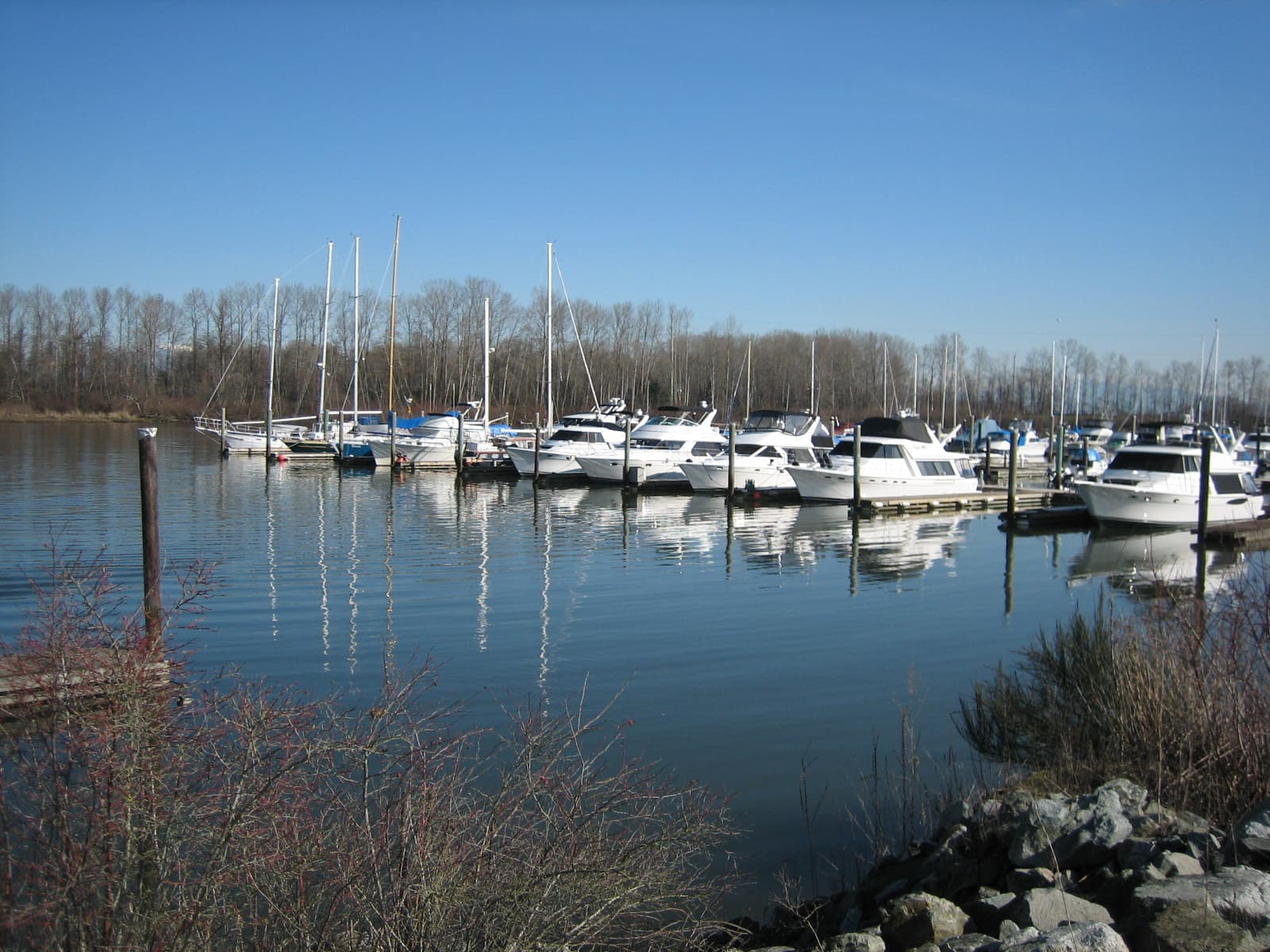
Delta's preserved heritage farming village — the Clock Tower, Captain's Cove Marina, and a Fraser River character you won't find anywhere else in Metro Vancouver.
The sunniest community in Metro Vancouver — ferry terminal to Victoria and Nanaimo, Boundary Bay beaches, and coastal-bluff single-family living.
Discover
Swipe or use the arrows →
Services in Delta
Local price ranges for the most-searched home services. Community submissions + researched quotes, updated regularly.
Food in Delta
Getting around
Delta has no SkyTrain stations within its borders and no planned extensions — the Surrey–Langley SkyTrain line follows the Fraser Highway through Surrey without dipping south. The closest SkyTrain is Scott Road station on the Expo Line, directly across the Surrey border from North Delta, reachable by a 15–20 minute bus ride from most of North Delta. Ladner and Tsawwassen are served primarily by the 601 and 620 express buses, both of which connect to Bridgeport Canada Line station in Richmond — about 35–40 minutes depending on traffic. All of Delta is in fare Zone 3. For most Delta residents, a car is the realistic default transportation mode; transit works for commuters but isn't competitive for general errands.
Scott Road SkyTrain (across from North Delta in Surrey)
Schools & health
Delta School District (SD 37) serves all three communities — North Delta, Ladner, and Tsawwassen — as a single district. Academic performance is consistently above the provincial average, with Seaquam Secondary (North Delta) and South Delta Secondary (Tsawwassen) both well-regarded. The district runs a particularly strong International Student Program, with students from Korea, Japan, Germany, and China making up a substantial share of secondary-school enrolment. Primary healthcare is through Fraser Health. Delta Hospital (in Ladner) is a mid-sized community hospital; for major trauma, cardiac, or neurosurgical cases patients are transferred to Royal Columbian Hospital in New Westminster or Surrey Memorial.
Safety in Delta
Delta has the lowest Crime Severity Index of any Metro Vancouver city VanCityGuide covers — a 2024 CSI of 55.3, dramatically below the BC average of 93 and the national average of 77.98. The Delta Police Department, which has policed Delta since 1888 and is one of BC's independent municipal police forces, attributes the decline to targeted property-crime enforcement and community partnerships. Delta's three communities each have distinct safety profiles: North Delta's Scott Road corridor sees the standard urban-commercial property crime (vehicle break-ins around Sungod Recreation Centre and Sunshine Hills Mall); Ladner is quiet and family-oriented with the lowest crime of the three; and Tsawwassen is similarly quiet with occasional ferry-terminal-related incidents (typically theft from vehicles in the long-term ferry lot).

Delta CMA
55.3
Crime Severity Index — 2024
Canada (all CMAs)
78.0
Crime Severity Index — 2024
How to read this
Delta is 22.7 points below the Canadian average. CSI weights crimes by sentencing severity, not just count.
Canada national average: 77.9
Quietest by every common-sense measure
Areas the news cycle asks about
The Scott Road / 120th Street commercial strip sees typical urban-retail property crime, especially theft from vehicles around Sungod Recreation Centre and Sunshine Hills Mall — well-lit and busy during the day, quieter at night.
Targeting newcomers
These follow a small number of repeating playbooks aimed at people who are new to the city, the country, or the rental market. None of them are unique to Delta, but the local versions are worth recognising in advance.
Common across all three Delta communities, especially for basement suites listed below market. Real Delta landlords show units in person; never send money before viewing and signing a BC tenancy agreement.
Robocalls in English, Punjabi, Hindi, Mandarin, and Cantonese claiming you owe tax or your immigration status has been revoked. CRA and IRCC do not call to threaten arrest. Hang up.
Persistent in Ladner, Tsawwassen, and Sunshine Hills — driveway sealing, roof inspection, gutter cleaning. Legitimate contractors carry Delta business licences. Ask for the licence and verify with the City.
Long-term overnight parking at the Tsawwassen Ferry Terminal sees periodic car break-ins. For multi-day Vancouver Island trips, use a taxi or ride-share to reach the terminal rather than leaving a car overnight.
North Delta's large South Asian community has been targeted by fraudulent contractors offering basement-suite construction or home additions without permits. Always verify city permits and contractor licences before paying any deposit.
What to actually do
Safety is about probabilities, not guarantees, and reasonable newcomer caution applies anywhere. If something feels off, trust that instinct. For non-emergency police reports in Delta, use the local non-emergency police line; for emergencies always call 911.
Weather & seasons
Delta has the driest and sunniest climate in Metro Vancouver — Tsawwassen's peninsula sits in the Strait of Georgia's minor rain shadow, with roughly 900 mm annual rainfall (compared to Vancouver's 1,189 mm or Coquitlam's 1,833 mm). Summers are warm (July highs around 23°C) and winters are mild (January highs around 7°C), with snow essentially never lying on the ground. Boundary Bay's tidal flats mean fog is more common here than in most of the region, especially in fall and winter mornings.
Summer (June–August) for Boundary Bay beach walks and Ladner Farmers Market. Late spring and early fall for migratory bird season at Boundary Bay. Winter for snowy owls on the Boundary Bay dyke.
From YVR airport, take the Canada Line to Bridgeport, transfer to the 601 bus (Ladner) or 620 bus (Tsawwassen) — about 55 minutes total. By car, the trip is 25–35 minutes via Highway 99. Taxi or ride-share runs $50–80. North Delta is faster — about 40 minutes from the airport by car via Highway 91.
The Boundary Bay border crossing at Point Roberts is in south Tsawwassen — but Point Roberts is a US exclave and not a usable general-purpose crossing. The Peace Arch crossing at Douglas/Surrey is 30 minutes east. Amtrak Cascades from Seattle doesn't stop in Delta.
Common questions
North Delta (population approximately 60,700 — dense urban area along Scott Road, largest South Asian community share in Metro Vancouver at 35%+), Ladner (approximately 26,800 — heritage farming village on the Fraser River), and Tsawwassen (20,933 — coastal community with the BC Ferries terminal and a noticeably sunnier climate). They're physically separated by the Agricultural Land Reserve and function as quite different neighbourhoods despite sharing a municipality.
Yes — Delta has the lowest Crime Severity Index of any Metro Vancouver city VanCityGuide covers. The 2024 CSI was 55.3, well below the BC average of 93 and the national average of 77.98 — down 13% from 2023. Delta has its own municipal police force (Delta Police Department, in existence since 1888), which locals broadly credit for responsive community-focused policing. The main risk areas are urban-commercial strips in North Delta; Ladner and Tsawwassen are consistently among the quieter communities in Metro Vancouver.
No — and none planned. The closest SkyTrain is Scott Road station on the Expo Line, which is physically in Surrey but directly across the North Delta border. North Delta residents can walk or bus to Scott Road in 15–20 minutes. Ladner and Tsawwassen are served by express buses (601 and 620) to Bridgeport Canada Line station in Richmond — about 35–40 minutes. Most Delta residents commute by car.
North Delta specifically is one of the best. Over 35% of North Delta residents identify as South Asian, Punjabi is the most-spoken mother tongue, and the Scott Road corridor (shared with Surrey's Newton area) is one of the largest Punjabi retail districts in North America. Punjabi grocery stores, halal butchers, Pakistani sweet shops, Afghan restaurants, and the Scott Road Gurdwara are all concentrated along a few blocks. Ladner and Tsawwassen are much whiter demographically.
Tsawwassen is the southernmost community in Delta — a coastal peninsula community of about 21,000 that calls itself "the sunniest place in Metro Vancouver" (Environment Canada climate data supports this). It's predominantly single-family houses on coastal bluffs, with ferry access to Victoria and Nanaimo via the BC Ferries terminal at the south end. The community skews older and more affluent than Ladner or North Delta, with a significant retiree population. Transit is limited.
From North Delta: about 55 minutes by transit (bus + SkyTrain from Scott Road) or 45–60 minutes by car. From Ladner: about 1 hour 5 minutes by transit or 55 minutes by car. From Tsawwassen: about 1 hour 15 minutes by transit (bus + Canada Line) or 55–75 minutes by car depending on traffic. Tsawwassen ferry terminal to Victoria on Vancouver Island is 1 hour 35 minutes plus the terminal wait.
Yes, particularly for families specifically drawn to heritage character and willing to accept car-dependence. Ladner Village is one of the best-preserved early-1900s farming villages in Metro Vancouver, with the Clock Tower, the Delta Museum, a Saturday Farmers Market, and independent restaurants. The housing stock is mostly 1960s–1980s bungalows on large lots — a detached house lists in the $1.2M–1.8M range. Heritage houses near the village command a premium. Rental stock is thin.
Yes — Delta School District (SD 37) is consistently above the provincial average in academic performance. Seaquam Secondary (North Delta) and South Delta Secondary (Tsawwassen) are both well-regarded public high schools. The district runs a strong International Student Program and has expanding French Immersion enrolment. For newcomer families, Delta is a solid public-school choice.
In almost all cases, yes. Walk Scores for Delta's neighbourhoods are: North Delta along Scott Road about 65 (somewhat walkable), Ladner Village 65, Tsawwassen 30–40 (mostly car-dependent). Grocery shopping, school drop-off, work commutes, and weekend errands all strongly favour having a car. Most Delta households run two cars.
On detached houses, about 25–35% cheaper for equivalent square footage — a benchmark 3-bedroom detached house in Ladner runs $1.3M vs $2.2M in Burnaby. On rental, the gap is smaller — purpose-built rentals in Delta are 10–15% below Vancouver. The trade-off is almost always the same: cheaper housing, longer commute, car-dependent lifestyle.
Plan further
If you're planning a visit, there are hour-by-hour itineraries with cited costs. If you're planning a move, the cost-of-living breakdown and the newcomer essentials guides are the next stops.
Monthly budget
Line-by-line monthly budget with cited rent, groceries, transit, and hydro numbers.
Day trips
Honest day-trip plans with BC Ferries and Sea-to-Sky Highway directions.
Newcomer guides
Step-by-step essentials for the first month in BC — cited and dated.
Keep exploring
Greater Vancouver is a collection of very different cities, each with its own rhythm, rents, and food scene. If you're comparing or planning a move, these are the obvious ones to look at next.
Fast-growing, family-friendly, with the strongest South Asian community.
Home to the best Chinese food in North America and Steveston village.
Downtown cores, historic neighbourhoods, and the densest food scene in BC.