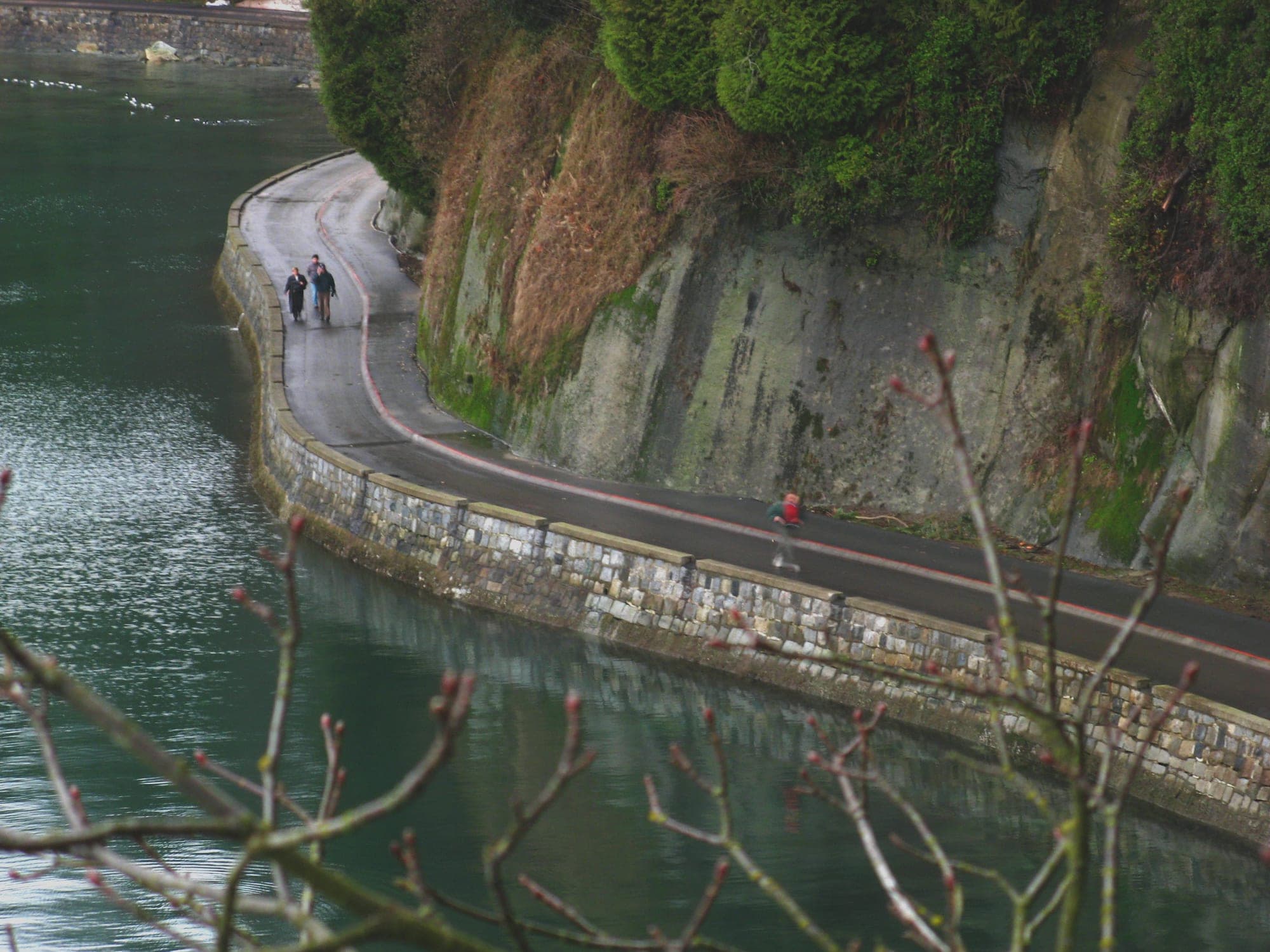
Stanley Park is 400 hectares — almost a square kilometre — of coastal temperate rainforest on the tip of the downtown peninsula. It's the third most-visited urban park in North America and has been named the world's best park by TripAdvisor users multiple times. What makes it unusual is that it's genuinely wild: old-growth Douglas fir and western red cedar stands, great blue herons nesting on the cliffs, and coyotes and beavers in the interior.
The 10 km seawall is the park's defining feature. It's flat, paved, stroller- and wheelchair-friendly from end to end, and hugs the coastline for almost the entire circumference. Allow about two and a half hours to walk the full loop, or rent a bike at Denman Street and do it in under an hour. The official cycling direction is counter-clockwise and you'll get shouted at if you go the other way.
Most tour buses stop at two places: Brockton Point (for the totem poles, which are the most-photographed attraction in British Columbia) and Prospect Point (for the view back toward downtown). Locals know to skip those for the quieter spots: Third Beach for sunset, Beaver Lake in the park's interior for forest solitude, and the Hollow Tree near Ferguson Point.
Bring water, bring a jacket (the park is noticeably cooler than downtown), and give yourself more time than you think you need.
How to get there
From downtown, walk north on Denman Street to the park entrance at Georgia and Denman (about 15 minutes from Burrard Station). The 19 Metrotown bus runs from Pender Street in downtown directly to Stanley Park Drive. Driving in is possible but parking fills up on sunny weekends and costs around $4/hour.
Local tips
- The seawall is busy on sunny weekends — go early morning for solitude
- Rent bikes on Denman Street, not inside the park (cheaper)
- Third Beach is the quietest sunset spot
- Bring layers — the park is noticeably cooler than downtown